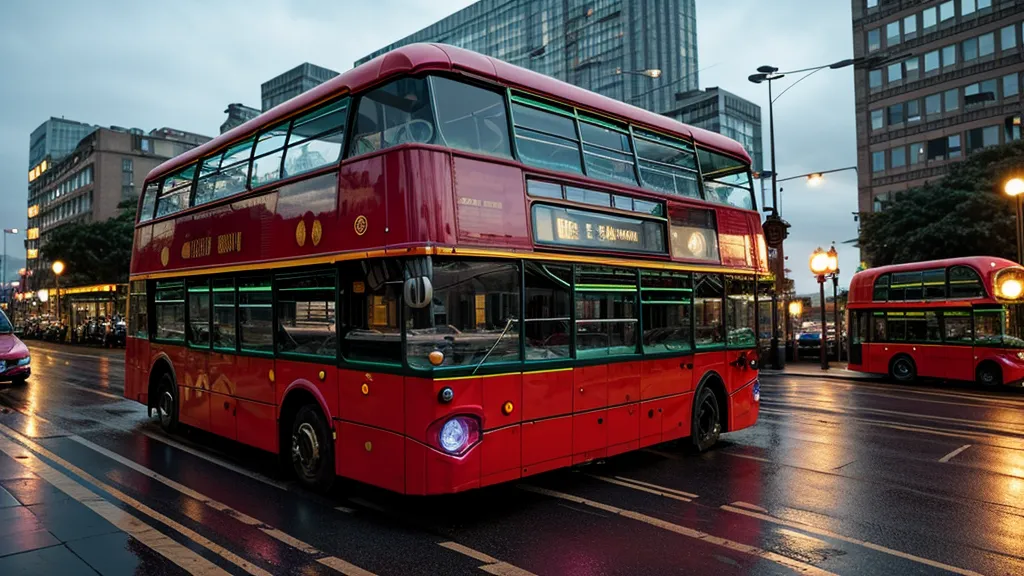
My elbow's jammed against the top-deck rail, the bus swings wide around the Flamingo curve, and the neon on the Wynn's marquee slides out of frame before I can lock focus. This is the part nobody warns you about: night photography on the Las Vegas Strip from a moving platform is nothing like the postcard version everyone assumes.
Quick disclosure up front: some of the tour operators and booking platforms named below pay me a small commission if you book through my link, at no extra cost to you. It doesn't change what's written here — I've run itineraries like this across 32 cities on my own card, and this Vegas night loop gets the same unfiltered treatment.
The Vantage Point Myth
The assumption goes like this: a hop-on-hop-off bus is for people who don't actually want to see a city, and any photographer serious about neon signage should be on foot instead, tripod in hand, working one block at a time. Walking the Las Vegas Strip with a full kit tests that theory fast. It's a 4.2-mile stretch of hyper-saturated light that breaks the normal rules of street photography, and on foot you're pinned at eye level with traffic barriers and selfie sticks the whole way. Private cars don't solve it either; tinted glass kills contrast and you're still stuck low.
This is where the Big Bus Las Vegas Night Tour stops being a tourist shuttle and starts being a tool. Ten feet of extra height clears the crowd line and puts you level with the mid-height marquees, the vintage tube signs that are quietly being swapped out for flat LED panels block by block.
Why a Tripod Doesn't Belong on a Big Bus Night Tour
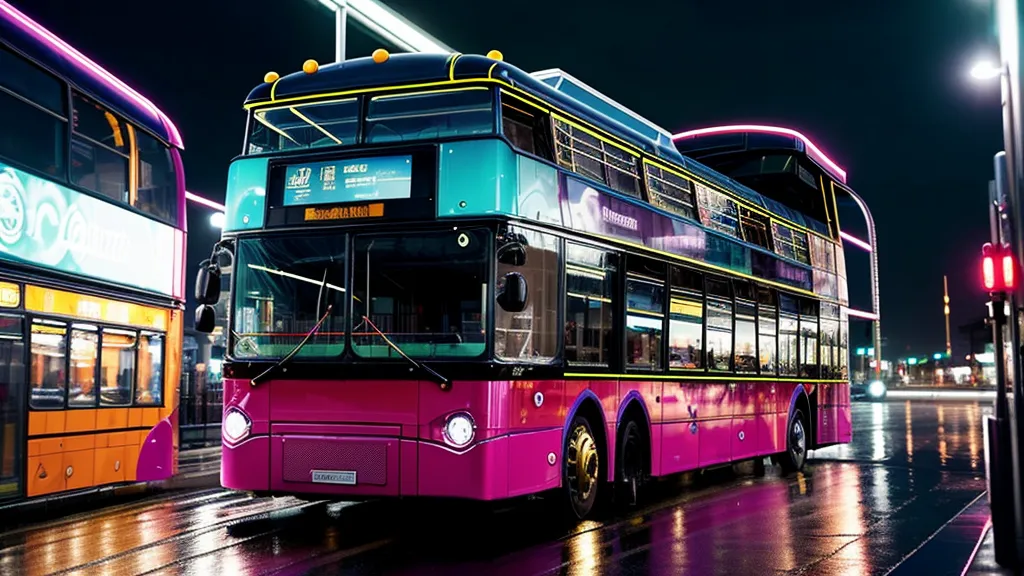
A tripod feels like the responsible move for any night shoot, and that instinct is exactly wrong here. Diesel vibration runs straight through the railing and up any set of legs clamped to it, so a tripod doesn't stabilize anything, it just gives the shake a new place to travel. The fix is unglamorous: tuck your elbows into your ribs, brace directly against the rail, drop to a wide-angle lens to minimize visible shake, and time the shutter to the red lights, the only moments the bus actually holds still.
Timing matters as much as bracing does. On the Strip, the golden-hour window runs shorter than what a Brooklyn-based eye is used to, the Mojave gives something like twenty minutes before true dark, against the long fade we get back home. Route timing around golden hour is its own puzzle in every city; a Paris skyline route chases that light differently than a Mojave sunset does, and that's a separate piece from tonight's bus. The same finger-fumbling swap between a 35mm prime and a wide zoom shows up on the open-top routes covered in Miami Street Photography Tips for the Big Bus Tours Open Top Route, though Vegas punishes a slow lens change more than Miami ever did.
What Actually Works at 25 Miles an Hour
Usually a slow crawl through gridlock ruins a shoot. Near the Stratosphere, it does the opposite. When the bus stalls in traffic, you can brace against the upper-deck rail and pull off a handheld frame at something like 1/15th of a second, completely impossible at cruising speed and something a fixed tripod could never adjust to fast enough anyway. Gridlock, on this one specific route, becomes the actual advantage.
That drag-the-shutter trick isn't unique to Vegas. I get a version of it off the Williamsburg Bridge pedestrian walkway back home, panning against BQE headlights on a slow night, though the Strip throws more competing color temperatures at a sensor than Brooklyn traffic ever does. My grip is used to a lens barrel turning slick in the kind of humidity that shows up on a Bangkok assignment; out here it just runs hot in dry desert air instead, sweat gone before it ever reaches the barrel.
One loop, the onboard audio had already clicked over to some far-numbered stop while we were still crawling past attraction three, like the narration belonged to a completely different route than the one stuck in traffic. That mismatch is the tour's real rhythm — audio paces itself independent of the traffic, so you end up shooting on the bus's actual clock, not the narrator's. The back-of-camera histogram lies more on this route than anywhere else I shoot, too; overhead LED strobing skews it. More than once my colorist and retoucher, Fumiko Odell, has flagged blown highlights in a Vegas file that looked perfectly clean to me in the field, hours after I'd already called the shot good.
There's a real trade-off buried in all of this. A private walking excursion gives total creative control, an hour parked on one corner if that's what you want, but a loop like this hits a dozen iconic points in a single continuous pass, more highlights reel than deep dive. I get a similar greatest-hits efficiency out of the Best Chicago CityPASS Attractions for Architecture Photography circuit, minus the moving platform, and pass break-even math matters there in a way it never does on a single-night bus ticket.
Fremont Street Changes the Rules
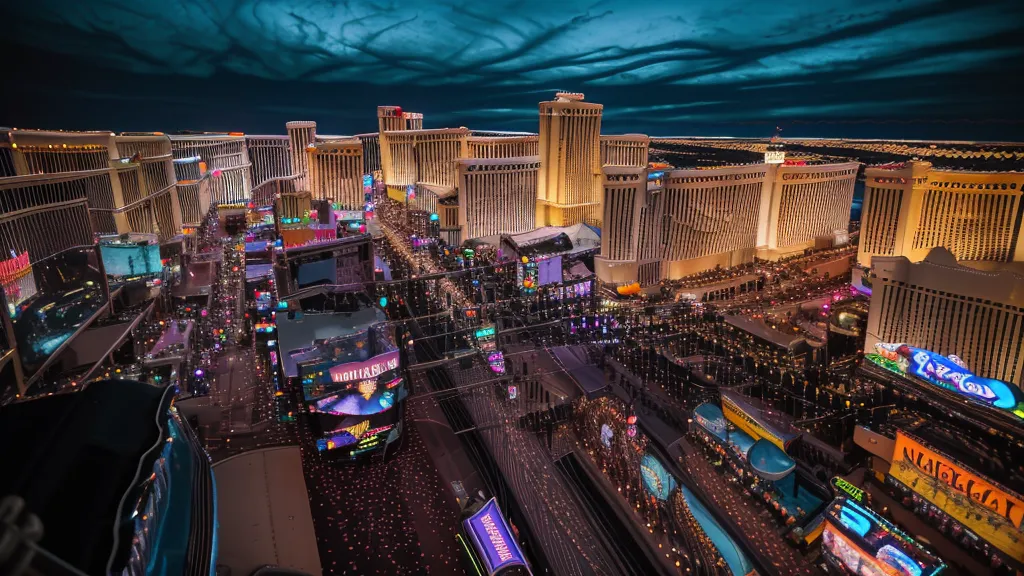
Downtown feels like a different assignment entirely once the bus leaves the polished Strip corridor. The Strip is about scale, one enormous eyeful of light stacked on light, while Fremont Street runs the opposite direction: dense, overlapping glow off old tube signs packed close enough that a normal wide frame turns into visual soup. A 35mm prime handles that density better than anything wider, which means another mid-transit lens swap, this time while the bus rattles over rougher pavement near the Arts District.
A single frame from this route still sticks with me. The bus was moving just fast enough to blur foreground pedestrians into a streak of color while the Vegas Vic sign held sharp in the upper third. You can't get that shot from the sidewalk; you need both the height and the motion working together, which is the whole case for being up here in the first place.
Parts of it still feel like a tourist trap, sure. The audio commentary competes for attention exactly when you're trying to nail focal length, and it doesn't stop for you. But as an elevated, mobile platform that gets you ten feet above the chaos, it earns its place in the kit. That's the actual correction here: not every hop-on-hop-off ride is dead weight for serious work, this one specific route just needs to be worked on its own terms.
Booking the Right Platform for the Night
Booking logistics matter more than most guides admit, and this is where my one real research regret comes in. Ahead of this trip I leaned on a paper guidebook that listed the stop order but not a single queue-time estimate, and it steered me straight toward a departure slot for a ticket window that had already closed for the loop I wanted. Leotis Chambers, a retired high school teacher from Atlanta and a regular commenter who's worked through three of my itineraries by now, once mentioned that he navigates entirely off printed screenshots instead of pulling up his phone live. Which, looking at my own paper guidebook, is basically what I was doing too, minus the excuse of it being intentional.
For this specific tour, I usually book directly through Big Bus Tours, since their listing tends to bundle extras like access to the Neon Museum, whose collection of 250 signs is essential scouting for anyone working this beat editorially.
If I'm juggling a multi-activity week instead of one single night, GetYourGuide becomes the better tool: the mobile ticket doesn't care whether hotel WiFi is patchy, the QR code just works regardless. Queue strategy shifts by city in ways I've covered elsewhere, and Vegas ticket windows are their own particular animal. Whether you go guided or figure out a route yourself is a bigger question than one bus loop can settle, but for a moving platform above traffic, guided is the only version that makes sense here.
I've used GetYourGuide for everything from this Vegas loop to the Big Bus London Night Tour, and hop-on-hop-off economics shift more than people expect between those two cities: a 24-hour Vegas window is generous for a single night shoot in a way London's tiered pricing isn't.
For Southeast Asia, or as a backup when a slot sells out, Trip.com carries inventory the Western platforms sometimes thin out on. Pass coverage tiers are their own rabbit hole entirely, every city pass covers a different slice of attractions, and matching a tier to your actual itinerary is a separate exercise from tonight's neon run. Lodging can double as a shooting platform in some cities too, more so in a place like Tokyo than here, since nothing replaces an open-top bus for covering the Strip's scale in one sitting.
Is a Bus Tour Actually Worth Your Night?
The honest answer is qualified, not a flat yes. If the goal is one carefully composed frame from a single fixed corner, skip the bus and go stand there for an hour instead; you'll get more control that way. But if the goal is height, motion, and covering a dozen scenes in one loop without your legs giving out, the bus earns its seat. The real correction isn't "buses are for tourists, not photographers", it's that this one is a specific tool for a specific problem, and writing it off as lesser is the actual tourist-trap thinking.
Grab an upper-deck seat a little before departure if you're heading out to shoot this route; front row is best, though mid-deck still clears the rail. Book directly through Big Bus Tours if this is your one specific night out shooting neon, or check GetYourGuide if the rest of your week still needs filling in.