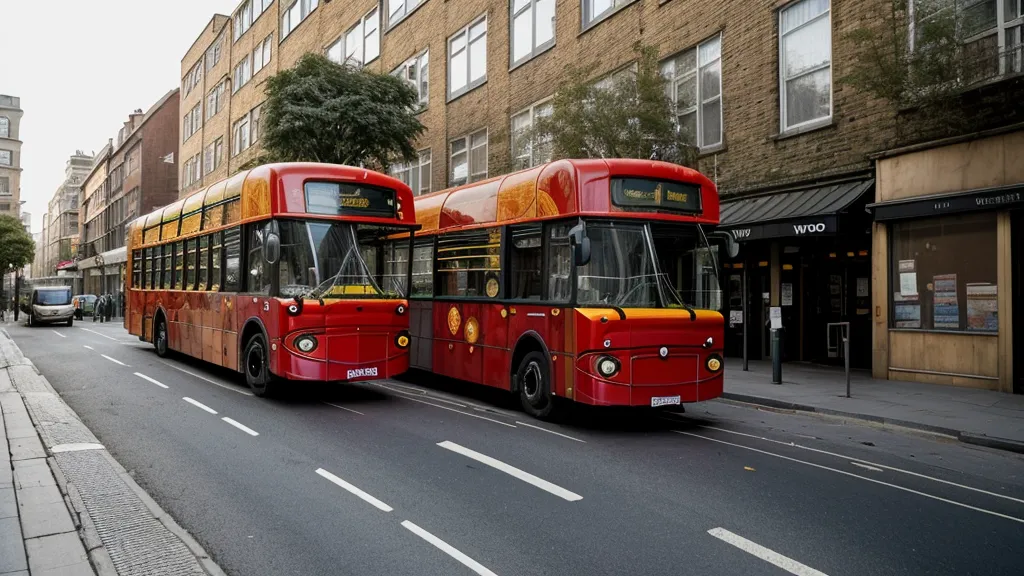
Ten stops on Miami's Red Loop, and I only got off the bus at two of them. That's more or less the whole strategy for street photography from the Big Bus Miami open-top deck — staying seated beats hopping off, and it took most of a humid February circuit past Bayside Marketplace before I actually believed it. Most of the people riding up top with me were hunting celebrity mansions or the nearest mojito. I was hunting elevation, a clean sightline over the parked SUVs and delivery vans that usually wreck a South Beach street shot.
Walking the sidewalk means fighting for every inch of clean composition — tourists' heads, trash cans, whatever scaffolding hasn't finished eating a block this month. Climb onto the open top deck of a Big Bus Miami vehicle and your camera sits high enough to clear most of that clutter, turning an ordinary corner into a layered study instead of a mess of legs and umbrellas. Six weeks into running this same kind of test across a handful of cities — treating every hop-on-hop-off route like a subject worth scouting twice before committing to it — Miami's Red Loop is the only one that earned a second lap before I'd even had lunch.
The Top Deck Clears Miami's Sidewalk Clutter
The full loop takes about two hours stop to stop, and I started treating the whole circuit less like a tour and more like a transfer between subway lines — except the view's better and nobody's stuck waiting on a delayed train. That window is enough to track how shadows move across the murals in Wynwood or the cigar shop awnings in Little Havana, which matters more than it sounds like it should. Light changes fast in Florida, and a stop that's flat and gray at 1pm can be worth stopping for entirely by 4.
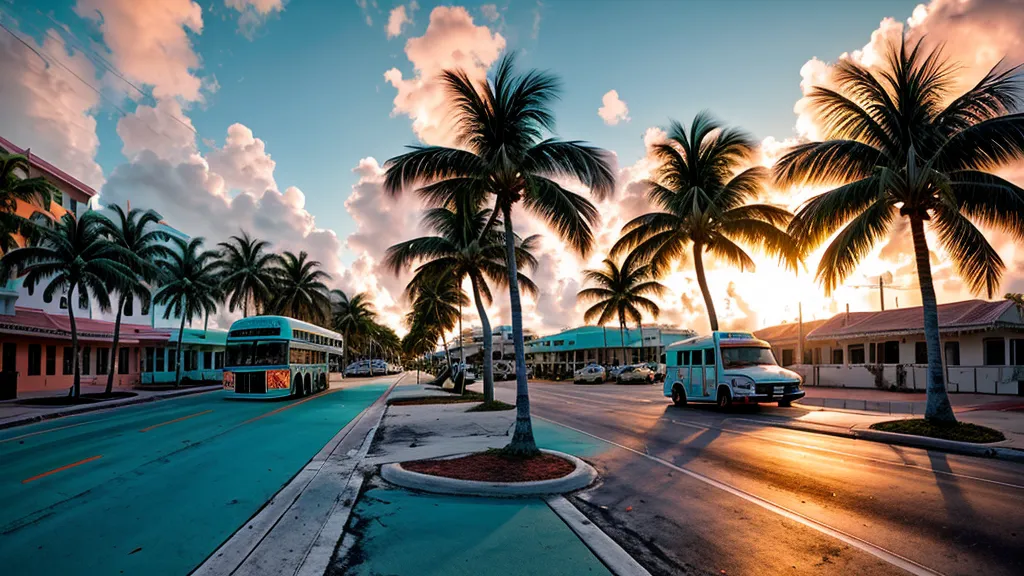
None of this works if the files come out soft, though. Vibration turned out to be the real enemy, not speed — the low, constant shake of the diesel engine under a moving deck, which does ugly things to a prime lens with no stabilization. I ended up bracing my elbows against my ribs instead of the railing, using my own torso as the shock absorber, which is not a technique any manual teaches you.
Shooting Sharp From a Vibrating Diesel Engine
The standard advice says freeze the street below with a shutter speed north of 1/1000th, and for a crisp, reportage-style frame at 20 miles an hour, that advice holds up fine. But Miami wants more theater than that. One afternoon the clouds turned a bruised purple over the water, and instead of fighting the motion I decided to lean straight into it.
The Neon Blur Experiment on Ocean Drive
Most guides tell you to push your ISO and keep the shutter fast. I've found the opposite works better here — drop to 1/15th or 1/30th while rolling past the neon on Ocean Drive just before sunset, and the bus's own motion turns the signs into long, fluid streaks that wrap around the architecture instead of sitting flat against it. A fast shutter makes that same scene look static, almost like a postcard rack.
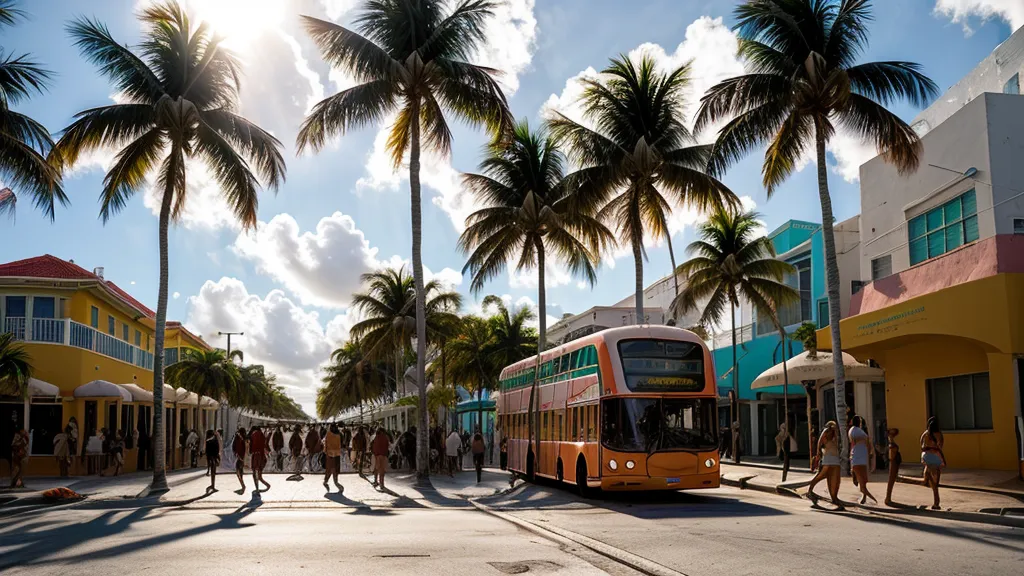
It's a bad-odds bet. Most of what you shoot this way is unusable, and culling the blurry frames afterward feels like digging through a junk drawer looking for the one screw that actually fits the hinge. But the keepers are worth the mess — a sharp-enough palm silhouette against a smear of electric pink, a classic car outline holding still while the whole street behind it dissolves into color. I leaned on the same long-shutter trick on the Big Bus London Night Tour, where one ticket covers a full night of moving vantage points and the economics of the format work out fine either way, and I've chased a version of it on a night route through Vegas too, neon smearing across the frame in a completely different register than it does on Ocean Drive.
Crossing the Causeway Into Wynwood
Crossing the MacArthur Causeway is its own kind of sensory overload — salt spray off Biscayne Bay hitting your face right as you're trying to swap a memory card one-handed. The wind picks up hard out there, and I've watched more than one lens cap take a swim because somebody didn't clip their gear down first.
Wynwood is where the scale really shifts. I'd walked the Wynwood Walls plenty of times at ground level, but seeing the murals from the top deck changes the geometry entirely — you catch the roofline and the way the paint fights with the power lines and the palms for space. It reminded me of shooting the Bushwick Collective on Troutman Street back home, mural blocks scrolling past instead of standing still, no chance to circle back for a better angle once the bus has moved on. The driving through here is rough, too — a hard jolt through my shoulder every time the driver braked for someone crossing near NW 2nd Avenue, gear pressed against the rail to keep the glass from cracking against it. I texted Priyanka Suri, the photo editor who checks every place name and opening hour before my pitches go anywhere, to confirm the loop still stopped on the same corner — she'd caught a schedule change on a different story months back, and I wasn't about to guess wrong twice.
Gear Notes for the Open Top
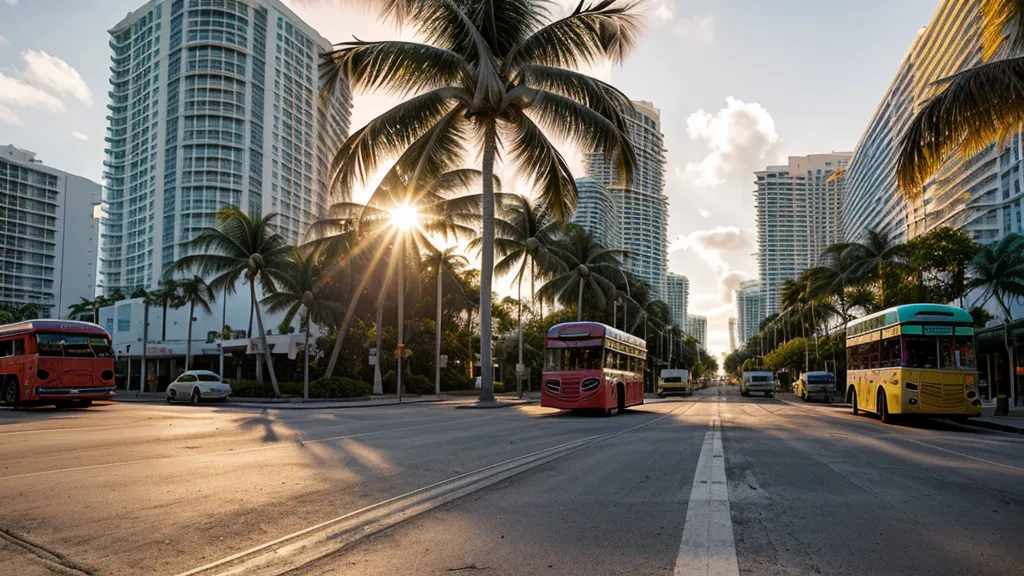
Leave the heavy telephoto at home for this one. A wide-to-normal zoom or a 35mm prime covers what you actually need, since the goal is the environment, not a tight crop of a single sign. Florida light is brutal on top of that — a polarizing filter isn't optional, it's what cuts the glare bouncing off the Art Deco pastels and the glass towers up in Midtown.
Watch the sky the whole time. Tropical downpours here don't announce themselves. A plastic rain cover lives in my bag permanently, because a weather-sealed body is not the same thing as a waterproof one, and I learned that the expensive way once already. If the clouds start stacking up dark, be ready to duck down a level and accept the worse angle — though the light right after a downpour, wet asphalt doubling every neon reflection, is sometimes the best of the whole day.
Scout the Loop Twice Before You Shoot
This bus is one piece of a much bigger habit at this point — I've spent plenty of time working out whether a multi-attraction pass actually breaks even against paying per ticket, whether skipping a line is worth whatever surcharge sits on top of it, whether a route timed around golden hour beats one that just happens to pass a skyline at the right moment anyway. Somewhere in there is the guided-tour-versus-wandering-solo question, and the fact that the coverage on bundled city passes rarely lines up with what you actually want to shoot. Even where you sleep factors in — a room with the right sightline can save you an entire outing before you've left the building. A reader named Nikoleta Baran, who never books a single ticket without locking it in three or four weeks ahead, once wrote in asking whether the Big Bus needs reservations the same way a timed-entry museum slot does. It doesn't. You just show up and climb the stairs, which might be the one part of this whole loop that rewards the opposite of her instinct — showing up and figuring it out on the spot.
Before the trip I'd downloaded some offline city-mapping app specifically so I wouldn't burn through data roaming — it crashed every single time I tapped to drop a pin, right when I needed to mark a spot for the second loop. I fell back on screenshotting the map instead, which worked about twice as well as the app ever had. That's the real reason the two-loop method matters: use the first pass to note which buildings are catching shadow and which are about to go gold, mark it however actually works for you, and treat the second loop as the one where your settings are already dialed in before the driver even taps the brakes turning the corner into Little Havana.
Certain mornings feel like a rehearsal for this. I've had the same sensation standing alone on the Chicago Riverwalk right around sunrise, the architecture boats still tied up and quiet, like the whole city had been left out just for me for twenty minutes before the tours started. Miami's version of that is the first loop — quiet not because nobody's around, but because you haven't decided what to shoot yet.
Back in the loft in Gowanus a few days later, sorting the take under skylights taped over with diffusion film so the color-checking on the monitor doesn't lie to me, I pinned the two sharp neon frames up next to the rest of the contact sheets on the brick wall and wheeled a gear cart out of the doorway to make room to sit down. The lesson that actually travels beyond Miami is simple: a hop-on-hop-off bus is a bad tour and a genuinely useful scouting tool, and the trick is knowing which one you're using it for on which loop.