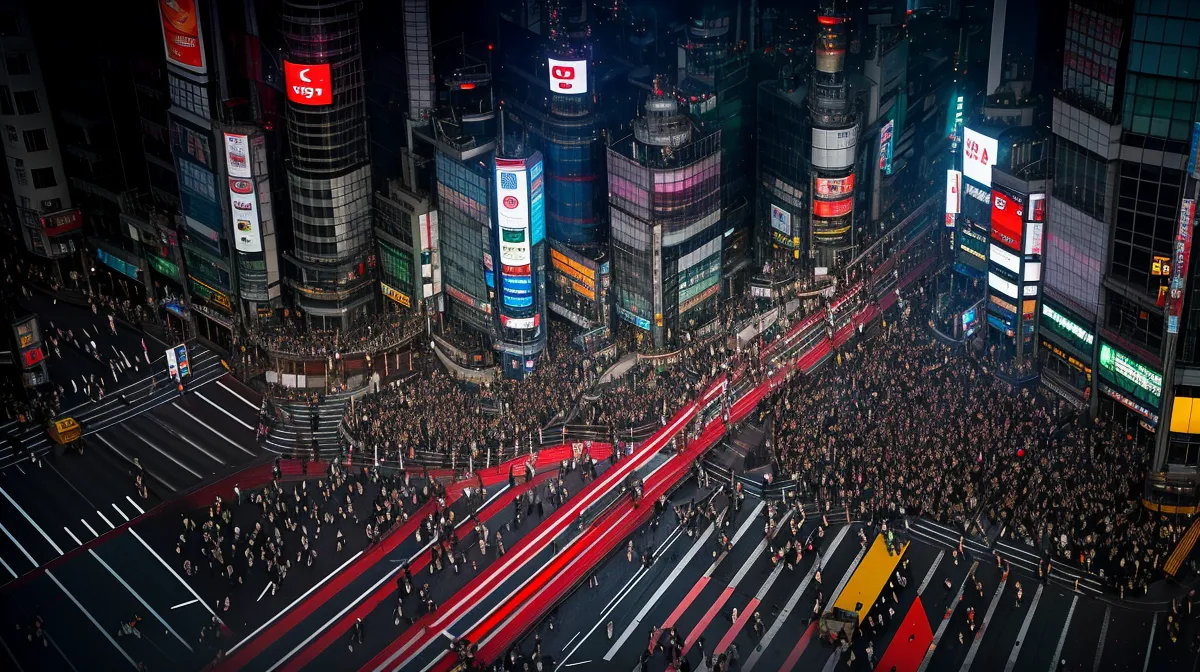
Six floors. That's the entire band of usable elevation in a Shibuya hotel room — climb past it and every pedestrian below turns into an ant, drop below it and a delivery truck's roof eats your frame. Tokyo travel guides don't talk about this, because it has nothing to do with amenities or the breakfast buffet; it's a street photography problem, and it's the whole reason I stopped picking Shibuya hotels off a star rating and started picking them off a spreadsheet of floor numbers. Travel gear gets all the attention in this hobby — the lens, the tripod, the filter — when the single biggest variable is which window you're standing behind.
Some of the booking links below earn me a small commission if you use them, same deal as the note up top, at no extra cost to you. I've tested this exact approach — booking for the view instead of the star rating — across enough cities now that I trust the pattern more than any five-star listing, and Shibuya is one of the harder tests, because its skyline refuses to sit still for more than a season at a time. I'm not a travel agent. I'm just someone who has stood in a lot of rented rooms waiting for a particular strip of pavement to fill up with the right kind of light.
The Floor Range That Actually Works in Shibuya Hotels
The number that actually matters is the range between floor twelve and floor eighteen in most Shibuya towers. Below that, you're shooting over rooftops, air-conditioning units, and the backs of billboards, with nothing that shows the actual choreography of Shibuya Crossing, which moves something like three thousand people every time the light changes. Above floor eighteen, that same crossing flattens into a diagram — you can see the pattern of the crowd, but you lose every individual face, every hesitation, every person checking a phone mid-stride.
A 200mm prime is the tool that makes this floor range non-negotiable. Any higher, and the lens turns into a mapping instrument instead of a portrait one. Any lower, and a bus roof eats half the composition. Hotels love to advertise a "city view" room without ever specifying which floor that view sits on, and that vagueness is exactly the gap this whole approach is built to close.
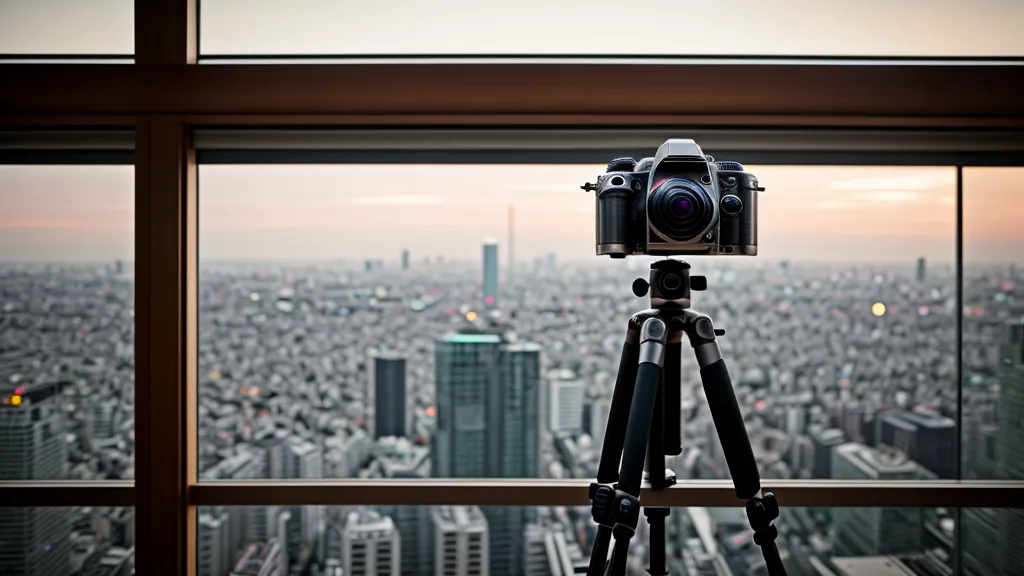
Why a Window Beats the Public Observation Decks
Public decks get you altitude, not control. Glass reflections from the deck's own interior lighting are impossible to block once the building fills up, and staff start hovering if you camp one spot for more than a few minutes with a tripod. A rented room removes both problems — you own the reflections in that room, you own the schedule, and nobody asks you to move along after four minutes. The same queue math I use to decide whether skipping the line at a place like the Vatican is worth paying for applies here too, just turned vertical: whichever line moves slower loses, and an elevator during a tour-bus rush is its own kind of queue.
Getting to that room in the first place is its own small ordeal. Tokyo's train stations are a geography lesson on their own — I once came up out of exit C at the metro stop nearest Shibuya with a phone map pointing confidently in the exact wrong direction, the arrow so sure of itself that I walked two full blocks before the buildings stopped matching the screen. It's the same disoriented crowd logic as the Grand Army Plaza Greenmarket back home on a Saturday, except everyone there is aiming for a produce stall instead of a hotel lobby. A friend of mine spends those same Saturday mornings playing softball in Prospect Park instead, blissfully unaware that my version of his weekend routine is getting un-lost outside a station exit with a camera bag digging into one shoulder.
Booking Around Tokyo's Fast-Changing Skyline
Room inventory in Tokyo turns over fast enough that a hotel's marketing photos are sometimes already out of date by the time you book. New towers go up between one trip and the next, and a "city view" room can quietly become a view of somebody else's exterior wall. I use Trip.com to check real-time room selection for Japan now, since their inventory for Asian properties tends to run more current than what shows up on Western platforms, and I specifically request a floor in that twelve-to-eighteen range instead of trusting whatever the listing calls a "view room."
Dogenzaka is the neighborhood that makes this whole approach practical instead of theoretical. It sits at the messy transfer point between the main tourist strip and the backstreets, so a high floor there gives you the neon wash of the crossing and, a short walk later, the quieter alleys where blue hour light does something completely different against concrete than it does against glass. At that hour the signage doubles itself in the rain-slicked crossing below, the lit skyline smearing into its own reflection on wet pavement the way a harbor mirrors itself back. Stay out past the last train and Dogenzaka still works in your favor — there's a 24-hour Lawson on nearly every block, so you can swap batteries and warm up under fluorescent light before heading back into a dark alley sixty seconds later.
Dinner between shoots is where I've gotten it wrong more than once. On one scouting trip I followed a Tripadvisor top-ten list to a noodle shop that turned out to be shuttered — gate down, no sign of the place that supposedly had a four-month wait, just a real estate flyer taped to the glass. Fixing it meant a half-mile detour in the kind of thin, cold rain that shows up in Tokyo in January, camera bag getting damp, dinner plans blown for the night. Lists like that go stale faster than the skyline does. Shooting neon streaks out of a moving train window, for what it's worth, is a different skill entirely from shooting a static hotel frame — it rewards a much slower shutter and forgives none of your hand shake.
What to Do When the Window Comes Up Empty
Weather or construction sometimes wins anyway, and the backup plan is one of the public decks after all. Shibuya Sky sits two hundred twenty-nine meters up, and at that height you're not shooting individual faces anymore — you're shooting the macro texture of the whole district, which is a different but still legitimate picture. I book that slot through GetYourGuide specifically for the free cancellation window, so if a weather front is about to wreck the light I can pull the ticket without eating the cost. That's the same break-even math that decides whether using a New York CityPASS actually saves money back home — you're only ahead of the individual ticket price once you clear a certain number of stops, and one wasted, overcast morning at Shibuya Sky can erase whatever you saved.
Whether you want someone walking you through the deck's better corners or you'd rather just ride the elevator up with a ticket and figure it out yourself is a separate decision from the floor-height math, and it usually comes down to how much of the visit is about the photos versus the experience. Either way, the golden-hour routing logic is the same one that decides which stop to get off first on a hop-on-hop-off route through a city like Paris — you take the position with the best light first, because the good light never waits around for the flatter light to finish.
Reading the Crossing Below Your Window
A dark hoodie or a simple lens skirt over the front of the glass solves most of the reflection problem, since a bedside lamp left on will ruin an otherwise clean long exposure of the crossing every single time. A 24-70mm covers most of what happens at the twelve-to-eighteen floor range, though a 70-200mm is worth packing too, for compressing the crowd into a denser, more layered pattern than the wider lens can manage. The pedestrian signal down at the crossing has its own audible rhythm, a rapid two-tone chirp that repeats every couple of minutes, and it works as a timing cue for a shutter drag the same way a drummer's click track keeps a band together when nobody can see each other.
Rainy, overcast light in Tokyo behaves a lot like the diffused grey I've shot under in London — the same principles from Mastering the London Softbox carry over almost without adjustment, because a heavy cloud layer turns into a giant overhead softbox no matter which hemisphere it's sitting over. What doesn't carry over is any kind of attraction pass. Different cities cover wildly different tiers of what's actually worth seeing under their version of a CityPASS, and Tokyo has no real equivalent, so the floor-height approach ends up doing the work that a pass would handle somewhere else.
The Short Version If You're Booking Tonight
Book the floor, not the amenity list — somewhere between twelve and eighteen in a Shibuya tower — and treat the observation decks as a paid backup instead of the main event. The same hop-on-hop-off economics that make a bus tour worth the money in one city and a waste of a morning in another apply to whether that backup ticket is worth booking at all: it only pays off if the primary plan actually falls through. I check Trip.com first for room inventory, and I keep a GetYourGuide booking for Shibuya Sky sitting in reserve, unconfirmed, for whichever morning the weather refuses to cooperate.