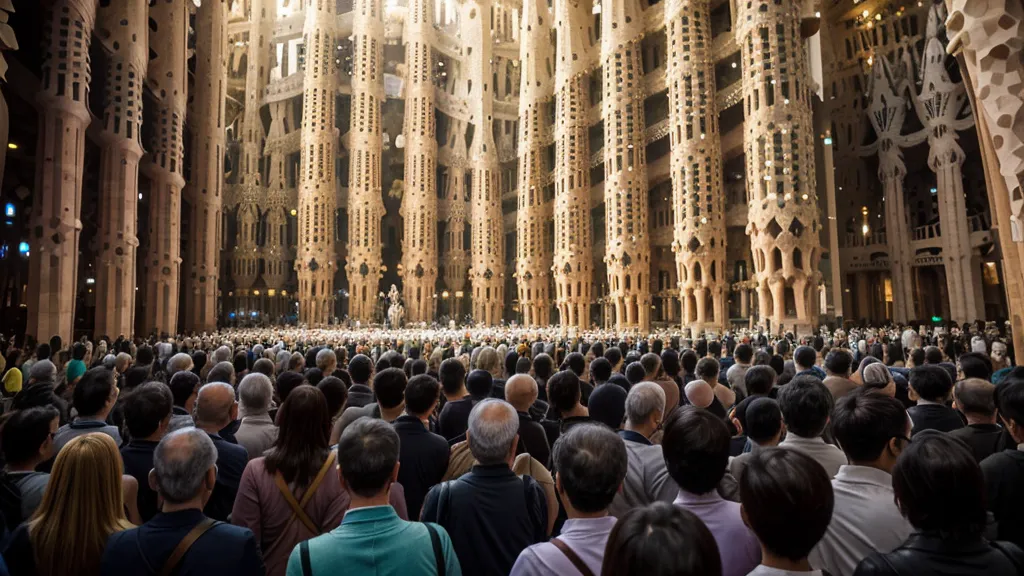
A timed-entry slot still leaves you standing in a line that wraps half the block. That was what I faced on my second morning in Barcelona, staring at a queue outside the Sagrada Família that curled almost to the corner of Carrer de Mallorca while my phone sat open to a ticket that was supposed to mean skipping exactly this. Barcelona architectural photography tours get sold on a promise of clean, fast access, and this one hadn't delivered yet.
For the record: a handful of the tour operators and booking platforms mentioned on this site, GetYourGuide included, pay me a small commission when you book through one of my links, at no extra cost to you. Enough of my own money has gone into cities across the US, Europe, and Southeast Asia that I only write about the ones I've actually used. That doesn't soften my notes on which mornings were worth the light and which ones burned a golden hour for nothing.
The GetYourGuide Barcelona Booking That Replaced a Concierge Markup
Booking through the hotel concierge felt like the safe move the first time I tried it, and the comfort cost more than it should have. The desk clerk made a call, quoted a price higher than the operator charged on its own site, and I signed off anyway because it was early and I hadn't had coffee yet. That single decision is what finally pushed me toward vetting tower-access options directly through GetYourGuide [Editor's Pick], instead of letting someone else's phone call stand in for my own homework.
What Actually Gets You Clean Frames at the Sagrada Família
Most people treat the Sagrada Família like a checkbox stop, but for a photographer it behaves more like a moving target. The basilica has been a UNESCO World Heritage site since 1984 and it's still under construction, an actual working structure of stone and glass rather than a finished monument. The central Tower of Jesus Christ is slated to reach 172.5 meters once it's finished, which will make it the tallest religious building in Europe. The real obstacle on any given morning isn't the height. It's the number of other people standing exactly where you need to stand.
A "secret" vantage point I'd seen floating around social media cost me forty minutes once, a supposedly clear shot of the spires over a reflection pool that turned out to be walled off by scaffolding and a security guard with zero interest in negotiating. Chasing a ghost shot while the real light burns away behind you is one of the oldest traps in this line of work, and it's the kind of wasted stretch that makes a structured tower-access booking look less like a tourist crutch and more like basic risk management for anyone hauling a heavy kit.
Reading Gaudí's Light Before It Moves On
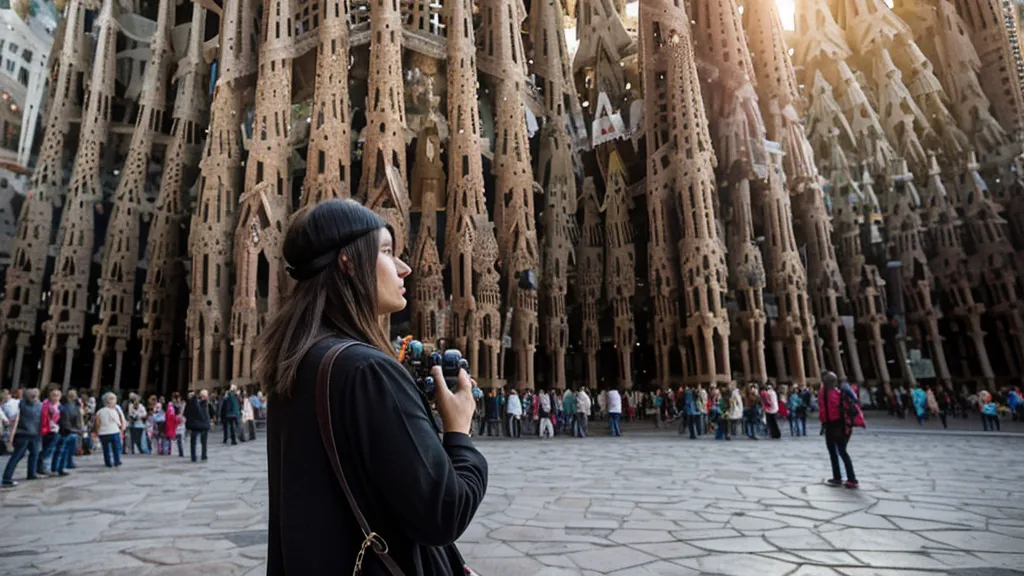
Gaudí built the nave to branch upward like a forest, and the light through the glass reads by direction: cool blues and greens on the side that catches sunrise, warm reds and oranges on the side that catches sunset. The only other place I've watched light behave this specifically is the Williamsburg Bridge pedestrian walkway back home, where the East River throws a similar directional glow for a short window each side of sunset. Getting those saturated tones on the stone floor without a midday wash-out means being inside at a specific hour, not just on a specific day, and the only reliable way to hit that window was climbing the narrow spiral stairs right after clearing the line that skip-the-line access exists to solve.
Guided access versus figuring it out solo is a call I've made often enough now to trust my own instinct on when structure earns its keep, something covered at more length in GetYourGuide After 32 Cities. In Barcelona, skip-the-line isn't a luxury add-on. It's a technical requirement, since a patchy signal at street level makes an offline-capable ticket the difference between shooting the nave and shooting the gift shop instead. The ticket itself held up like a downloaded playlist that keeps playing after the wifi drops.
Temperature drops fast inside the tower stairwell, a shift from humid street air to something closer to a cellar, and it works as a small reset before the shot. A 70-200mm telephoto is not the ideal lens for tight spiral turns, but the view from the bridge between the towers, the Mediterranean stretched out past the fruit-topped spires, makes carrying the extra glass worth the tired calves and the brief flash of vertigo at the top.
What Skip-the-Line Actually Delivers
One March morning, a local operator changed the meeting point for a specialized tower slot with almost no warning, after a protest shut down a street near the Sagrada Família station. That's normally where a shoot falls apart. Instead, the app updated the route in real time and pushed the new meeting point straight to my lock screen, so there was no scrambling through email while the light disappeared.
Nikoleta, a travel blogger who tends to catch factual inconsistencies before they compound across my guides, had already flagged the timed-entry mismatch at this basilica days before I landed, which is part of why the mismatched line didn't catch me off guard.
Where the Same Math Doesn't Hold
Big Bus Tours [Best for First Visits] earned its keep scouting the Eixample district before I committed to a walking shoot, the kind of pass that only pencils out once you actually ride multiple stops instead of treating it as a one-way lift. A CityPASS [Math Pick] can save real money on a heavy museum run, though the break-even math I run on one in New York, whether four attractions in two days beats paying solo, doesn't apply here, since Barcelona doesn't bundle tower access into that kind of pass. Every city also grades its coverage tiers differently: what counts as a top attraction in one pass is filler nobody would visit in another.
For last-minute bookings outside Europe, Trip.com [Backup Booking] has occasionally filled a gap, though its inventory for a slot this specific tends to run thinner than GetYourGuide's catalog of 75,000-plus activities across 16,000-plus destinations.
Paris handed me a related headache: a golden-hour routing problem from mapping a hop-on-hop-off loop against the sun. You're stuck on somebody else's stop order, not its schedule, which is exactly why a fixed tower slot beats a bus seat when the light is the whole point. Sometimes the smarter move skips tours entirely. Choosing a hotel floor with the right sightline once did more for a shot in Shibuya than any ticket could, though a basilica interior never gives you that option. Night exposures shot from a moving bus deck, the kind I finally got right on a Las Vegas loop, are a different problem altogether, one Barcelona's daytime towers never ask of you.
Working Without a Tripod, One Held Breath at a Time
Tripods are restricted inside the basilica without a press permit, a detail that never makes it into the marketing copy, which makes steady hands and decent high-ISO performance non-negotiable. Leaning against a cold stone pillar and using my own body as a monopod got the shot through the red glass on a February evening, a slower and shakier method than a locked-off long exposure, but a more honest one.
Private donations and ticket sales fund the whole structure, which is why the cranes never really disappear. Part of the job is framing them out, or better, folding them into the story of a building that's been rising for over 140 years. Queue strategy at a site like the Vatican runs on the same logic it does here: arrive with a plan for the wait itself, not just a ticket that promises to erase it, a point the Skip the Line Tickets for Photography at the Vatican guide covers in more depth. Booking tower access through a platform this size really just means paying for the ability to get above the construction fence.
Priyanka, a photo editor who's blunt about which frames are commercially viable and which ones are just personal indulgence, looked at the tower-bridge shot from this trip and called it the second kind, immediately, no hesitation.
Five weeks into this stretch of testing tower-access options across different cities, the pattern has held steady enough to trust: a timed ticket is a floor, not a guarantee. It's insurance against not having a slot at all, not proof you'll walk straight in. Treat the booking as the transit that gets you to the platform, not the reason you're there. Confirm the sun's path before the meeting point, and keep the phone charged, since the light won't wait for anyone still hunting for a ticket booth. Anyone chasing this kind of access should look at the tower-access options on GetYourGuide early, since the Nativity-side morning slots fill up weeks out and that's the side that holds the crisp, directional light the whole basilica is known for.