
A fixer with a permit and a cherry picker gets you a private balcony over the Champs-Élysées lit by a proper golden hour; a Big Bus Tours ticket gets you nearly the same fourteen feet of height for roughly forty-five Euro and a seat next to a stranger eating a crepe. That gap, between what a permit costs in hassle and what a hop-on-hop-off ticket costs in Euro, is the whole argument for shooting Paris skyline photography from the upper deck instead of the sidewalk. This is what travel photography looks like on an ordinary Thursday afternoon, not the postcard version, the bus version.
Quick disclosure since it belongs up front: some of the tour operators and booking platforms named on this site pay me a small commission if you book through a link, at no extra cost to you. That doesn't change which afternoons get flagged as a waste. I've tested these routes on my own card across 32 cities, and the commission has never once rewritten my notes. I'm a photographer, not a travel agent, so the gift shop at the end of a tour has never made it into a caption.
Fourteen Feet Beats a Fixer's Permit
Fifteen miles is a normal shoot day for me on foot, dodging delivery vans, selfie sticks, and the green construction fencing that always seems to frame the worst possible angle. None of that clutter exists thirteen or fourteen feet up. The upper deck of a Big Bus Tours vehicle clears the street-level mess entirely and lines you up with the mid-level ornament on the Haussmann buildings instead of just their ground floors. Nikoleta Baran is the one reader who always asks about that mid-level ornament instead of the skyline pull-back — training in architecture before she started her own blog shows in what she zooms in on.
Scouting light, not sightseeing, was the whole point of buying the ticket. Vanishing points around the Étoile look different depending on where the sun sits, and a full loop lets you clock four or five of them before committing to a tripod at sunset. None of that costs extra legs.
Why the Red Route Is the Photographer's Loop
The Red Route circles rather than cutting straight lines between stops, and circling is the entire trick. Two laps around the Arc de Triomphe hand you a 360-degree spread of lighting options without leaving your seat, pick your flare, pick your shadow side, pick your backdrop. It's the same math I ran through in the Big Bus London Night Tour Review, whether a ticket earns its price back across enough loops, except here it's about chasing light instead of neon.
Queue strategy is a different skill for a different post, the line-skipping tricks that save you forty minutes outside the Vatican don't apply to a bus running on a printed schedule instead of a velvet rope. Guided-versus-self-guided is another argument I've made elsewhere; the Red Route is neither one, it's a vantage point with a driver and an audio track.
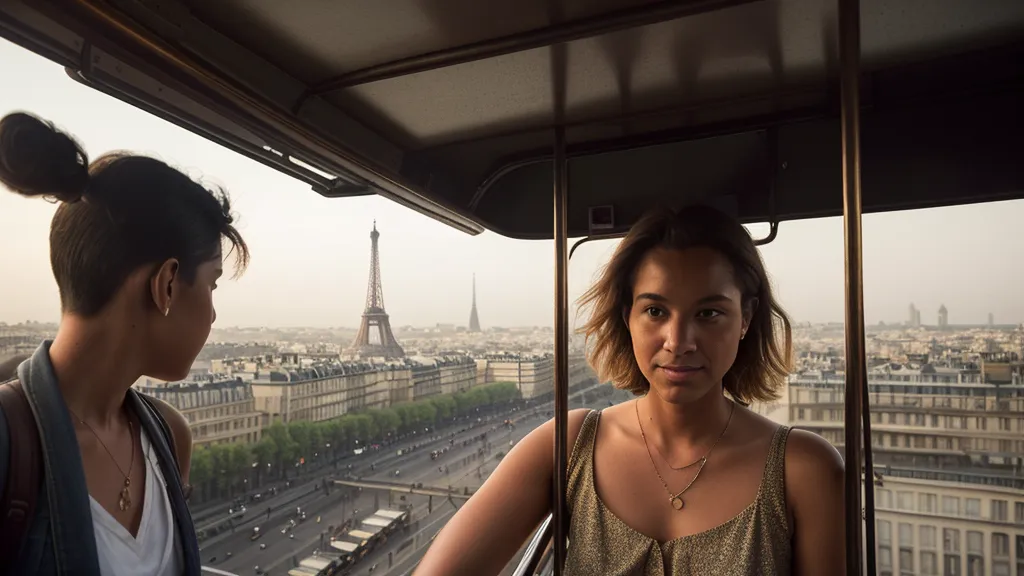
Skyline Photography and the Golden-Hour Loop Around the Arc de Triomphe
Golden-hour routing on this loop comes down to knowing which stretch faces west before the light starts dropping. Run the full loop once without shooting, hands off the camera, eyes on where the light lands on the stone, then go back for a second lap once you know it. That first lap is reconnaissance, not wasted time, because the mid-level ornament photographs differently depending on whether the sun sits behind you or rakes across the facade. Losing track of which way you're facing mid-loop feels exactly like coming up from Exit C at a Tokyo metro stop and watching the map arrow point you dead opposite from where you actually need to walk, the light will do the same thing if you stop tracking the compass along with the frame.
The stretch between Place de la Concorde and the Madeleine turns into a wide-angle goldmine in that raking light, eye-level with lamp posts and statues that read as tiny dots from the sidewalk. Shutter speed is non-negotiable once the bus is rolling, 1/500 is the floor, and the vibration through the floor plate is somehow worse at a stoplight than at cruising speed. A 24-70mm earns its keep as the everyday lens up there; a 70-200mm gets the compression shot of the tower from the Pont de l'Alma, but it's heavy to swing next to a stranger's shoulder.
Front row, upper deck, is the seat everyone wants. Fine, if you can get it. The mid-bus side seats give a cleaner lateral view of the side streets and about half the wind. None of that helps if you miss the bus entirely: on the main circuits, in peak season, they run every fifteen to twenty minutes, and drop into the off-peak or shoulder-season schedule and that gap stretches to twenty-five minutes, sometimes forty. Missing one at a stop with nothing worth shooting is the real cost of an unplanned stop, not the ticket price.
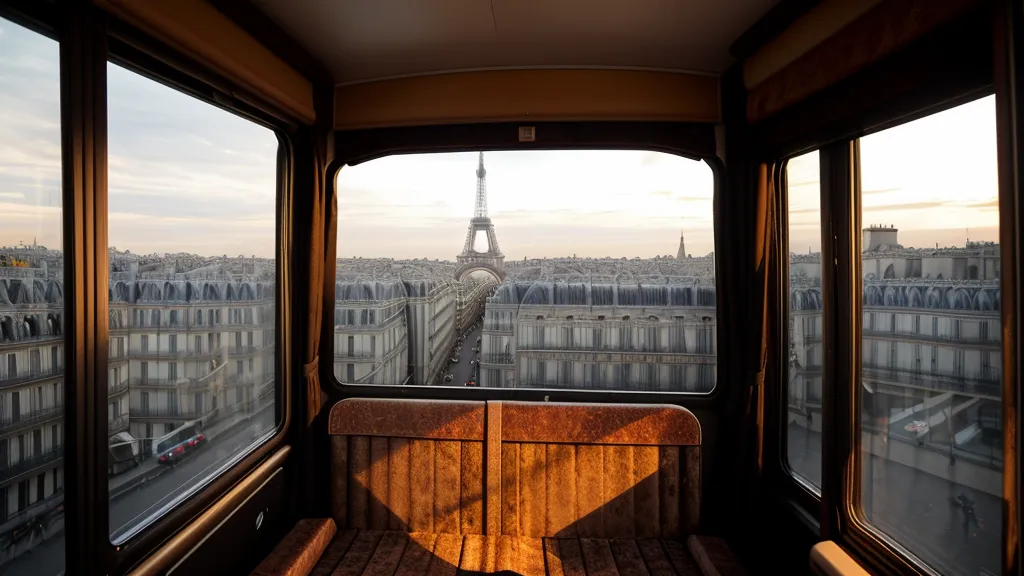
What Happens When Rain Hits the Top Deck
Rain kills the whole plan fast. A downpour that hit around 3:40pm in early May forced me down from the perch to the lower level, where the windows are scratched or beaded with rain and any serious frame is basically impossible. That afternoon went to the audio commentary instead, which turned out to be genuinely well-written, not the generic history-book voice I expected, and it primed me to know which facades were original stone and which were postwar restorations before I went back out the next day.
Before that trip I'd downloaded one of those offline city-map apps as a rain-day backup, the kind that promises to work without signal. It crashed every single time I tapped a pin. Every time. Test the backup before you need it, not during a downpour on a bus with wet camera bags underfoot.
Booking through GetYourGuide is the move if weather is the real risk, since most listings carry a 24-hour cancellation window, which matters more to a photographer than to anyone just sightseeing. A grey forecast means pushing the ticket back a day instead of shooting through rain beads on scratched glass. That's the same platform behind Barcelona Sagrada Familia photo tours, and it's held up in Tokyo and half a dozen other cities since. Whether a city pass ever earns back its cost is a separate question with its own math, and which attractions a given pass actually covers changes so much city to city that it deserves its own comparison, not a footnote here.
The Seine Adds the Water-Level Shot
Mornings on the Seine give a different texture than the night cruise everyone defaults to for the Eiffel Tower's five-minute sparkle show on the hour. Low sun on the water on an early June morning puts texture into the stone bridges instead of just glitter on the tower. The boat's low-angle view finishes what the bus started, one covers the streetscape from fourteen feet up, the other covers the waterline, and between them you've got the city's full range of elevation.
Reading a current from a boat deck is its own skill, and the Seine fighting itself near Notre Dame reminded me of testing this same handheld setup off the IKEA ferry dock in Red Hook, watching the Manhattan skyline slide by at water level long before I ever pointed a lens at Paris. Leading a subject from a moving boat is the same problem whether it's the East River or the Seine, and it's the same argument made in the Best Amsterdam Canal Cruise for Photographers piece, the boat always moves faster than it looks from the dock.
Where you sleep can double as a vantage point too, that case got made for a Shibuya hotel room already, but this Paris trip stayed strictly a bus-and-boat operation, no balcony shots involved.
Reading a Bus Route Like a Subway Line
Priyanka Suri texted around 6pm while I was still upstairs on the bus, asking why I'd only brought one body, she never travels without a second one and a bag of primes, and she's not wrong that it would've saved a lens change or two at speed. Shooting neon from a moving vehicle at night is a completely different exposure problem, one worked out on a Vegas night route, not this one, where the light was doing the opposite: soft, wide, daytime gold instead of a strip's worth of signage.
A hop-on-hop-off route makes more sense once you stop thinking of it as a bus and start reading it like a subway line with open windows, each stop a station, each gap between them a transfer where the light changes underneath you. By the fourth week of running this same test across different circuits this year, the stop-interval math had stopped being something to calculate and turned into something closer to instinct, less a discovery than a habit finally worn in.
Back in the Gowanus loft, the day's take went up on both monitors under that flat, even light a north-facing window throws once diffusion film is taped over the glass, no direct sun, no hot spots, just consistent color to judge the frames by. The brick wall of old contact sheets behind the folding table has absorbed worse days than this one. Comparing the bus frames against the boat frames side by side is the only way to tell which elevation actually won, and some days neither one does.
Is a Big Bus Tours Pass Worth Looking Like a Tourist?
Nobody's going to call a hop-on-hop-off bus cool, and yes, you'll look like exactly what you are. None of that matters if the frame is the goal. The Red Route earns its seat as a legitimate scouting tool, not a compromise, for angles that are otherwise impossible from the pavement without a permit and a fixer neither of us can afford on this trip.
The one thing worth carrying home from all of this: run the light-only loop before the shooting loop, every time, in every city, on every route. That single habit, more than the seat you pick or the lens you bring, is what turns a tourist bus into scouting equipment. If Paris is the first stop on a longer trip, grabbing a Big Bus Tours pass before committing to the long walks on the cobblestones is still the fastest way to map the light before spending your legs on it.