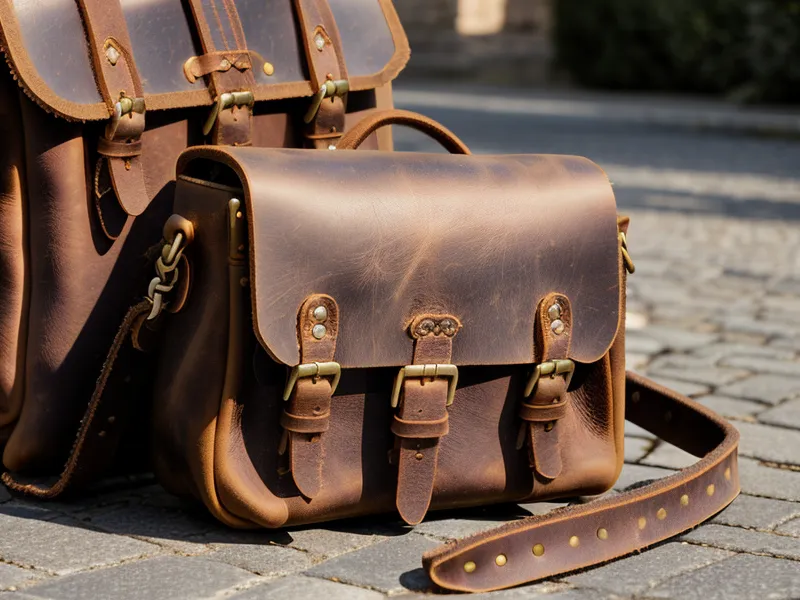
Forty people were crammed onto that sidewalk outside the Roman Forum, and by the time our guide finished explaining the arch nobody in the back three rows could hear, I'd stopped listening and started counting camera bags instead. Mine was the heaviest one there, a full mirrorless kit slung across both shoulders like I was covering a war zone instead of a two-hour walking tour. Rome punishes that kind of packing fast. The travel photography gear that works fine for a quiet afternoon testing lenses on the Prospect Park Boathouse lawn back home falls apart the second you're threading through a crowd on uneven stone with somewhere else to be in ten minutes. Heading into 2026, the question I get most from readers planning a Rome trip isn't which lens to buy — it's whether to book a guided walking tour at all, or go it alone, and the honest answer is that the gear you actually need depends on which one you pick.
Guided Groups vs. Going Solo: Two Ways to Shoot a Rome Walking Tour
A guided walking tour hands you context for free — dates, names, the story behind why a fountain sits where it does — but it moves at a pace a photographer never sets. You stop when the group stops, not when the light does. That morning at the Forum, I'd signed up specifically because I wanted the history without doing the research myself, and instead I got forty strangers between me and every good angle, plus a guide who never once paused long enough for a real frame.
Going self-guided flips the trade. You set the pace and chase the light whenever it shows up, but you lose the narration, which is why a lot of solo shooters lean on an audio guide app instead. Mine clicked over to track seventeen once while I was still standing at the third stop on the route, numbers scrolling well ahead of my actual feet, and by the time I caught up I'd missed whatever the app was telling me about the building in front of me. Self-guided gives you room to shoot. It doesn't give you a narrator who waits. That's the guided-versus-self-guided call every gear list conveniently skips.
Why the Heavy Rig Loses on Either Route
Either way you choose, the same rule applies: less weight, more shots. The sampietrini stones under Rome's sidewalks are notoriously uneven, and they vibrate through your soles hard enough that every extra pound in your bag registers by the second hour. Guys drag roller bags through the Pantheon district like they're pulling a subway car down a bike path, and it never ends well. Rome's tight geometry is closer to shooting the high-contrast "canyons" I wrote about in my How to Find the Best Lighting for London Street Photography notes than anything wide-open — the shadows arrive fast and don't announce themselves.
A heavy rig also makes you a fixed target, which matters more on a guided tour than a solo one — you're standing still longer, easier to clock, easier to get jostled in a crowd. Solo, you can duck into a side street the second your shoulder starts complaining. Either way, the fix is the same: carry less.
The Travel Photography Gear Both Routes Actually Need
One 35mm prime replaces the whole bag of glass I used to carry, on a guided walk or a solo one. Rome is a city of layers and intimacy, not distance — you can't zoom through the crowd at the Trevi Fountain, but you can dip and weave your body to find a gap, and a 35mm forces exactly that kind of movement instead of the zoom laziness a longer lens invites. On a guided tour, where you might get thirty seconds at a stop before the group moves on, that speed matters even more than it does on a solo walk where you can just wait for the crowd to thin.
A wide aperture, something around f/1.8, earns its keep the moment you duck into a basilica where the only light is hitting the altar at an angle. Rome's interiors are dark, ornate boxes, and without that aperture your ISO climbs into the kind of noise you'll regret later. I don't carry a tripod anymore — modern in-body stabilization paired with a fast prime handles almost everything handheld, and setting up a tripod near the Spanish Steps gets you a tap on the shoulder from the police before you've leveled the head anyway. That part doesn't change whether you're with a group or alone.
Where the Vatican's Bag Rules Tip the Scale
This is the one spot where guided and solo genuinely diverge on gear. The Vatican Museums enforce a bag-size limit of 40 x 35 x 15 cm, no exceptions, and if yours runs even a centimeter over, it goes to the cloakroom — with a reclaim line at the end that can run forty minutes, time you didn't budget for. A timed-entry slot is its own queue strategy for getting past the general security line faster, but it does nothing about the bag problem once you're inside.
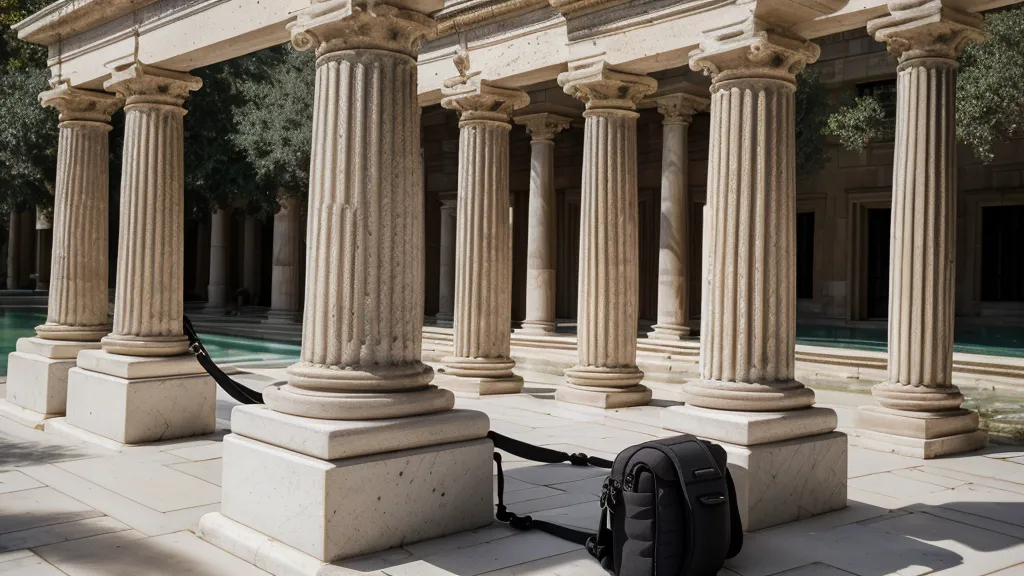
I carry a 6-liter sling now, small enough to sit high on my back or pull to my chest in a crowd — one body, one prime, two spare batteries, a thin rain shell, nothing else. It's the same logic behind what I liked about GetYourGuide Barcelona Sagrada Familia Tours With Better Photo Access: the smaller your footprint, the less you read as a professional threat to museum staff. Guards have waved me through with the small sling while guys behind me with dedicated camera backpacks got pulled for a full search. Solo, you can just leave the extra gear at the room; on a guided tour, you're stuck carrying whatever you brought for the whole loop.
Does Weather Sealing Change the Calculus?
A downpour tests both approaches the same way, just on different schedules. I got caught near the Pantheon a few weeks back when the sky opened without warning, and within a minute the street had turned into a mirror for the columns and the wet Trastevere stone beyond it. Everyone else on the sidewalk was fumbling with a five-euro poncho. My camera kept working because the body and lens are weather-sealed, not because I'd planned ahead particularly well.
My friend Weston Arambula won't leave for a sunrise shoot without checking three different apps first. He's the kind of photographer who has the tide tables half-memorized for cities he's never even shot in. He texted me the exact minute that storm would break, and I was back outside with maybe four minutes to spare before the light hit its peak. That window right after a Roman rainstorm is the best light you'll see all week — the dust gets washed out of the air, the ocher buildings go a shade deeper, and the crowds thin because most people are still waiting out the rain somewhere dry. Weather sealing is what lets you use that window instead of watching it from a cafe doorway. On a guided tour you don't get a choice about being outside when it happens; solo, you can chase the break yourself.
Cards and Batteries: The Math Doesn't Care Which Tour You Picked
Burst shooting eats cards fast on a walking tour, guided or not — you're firing through a crowd gap or a street performer's one good expression far more than you would on a slower commercial shoot. I carry two 128GB cards and swap them at the midpoint of the day regardless of how much room is left, purely as a redundancy habit. If one card fails or the body takes a fall on the cobblestones, the whole day isn't gone with it.
Batteries drain faster than people expect, especially if you're holding the rear screen up over a crowd for a high-angle shot, which happens more on a guided tour where you're often boxed in from the front. I carry two spares in the sling and skip power banks entirely — fumbling with a charging cable while walking is how you snap a port. Whichever route you're on, the goal is the same: look at the architecture, not a battery percentage.
So Which Route Wins in 2026?
Neither one wins outright — they solve different problems. Book the guided walk when you want the history handed to you and you're willing to trade shooting freedom for context; the gear stays minimal either way, but you'll be shooting fast and reactive, grabbing what the group's pace allows. Go self-guided when the shot matters more than the story, when you want to camp out at one corner of a piazza until the light does something specific, or backtrack for a frame you missed. If you're stacking five or six sites into a single self-guided day, that's usually close to where a multi-attraction pass crosses its break-even point; for a single guided walk, it almost never does.
The lesson that actually carries past Rome is simpler than any of the gear: figure out which trade-off you're making before you pack, not after. A heavy bag and a full lens kit are a fine choice for a static shoot with no clock running. They're the wrong choice for either version of a walking tour, guided or solo, because both punish anyone too weighed down to move when the light finally does something worth chasing.