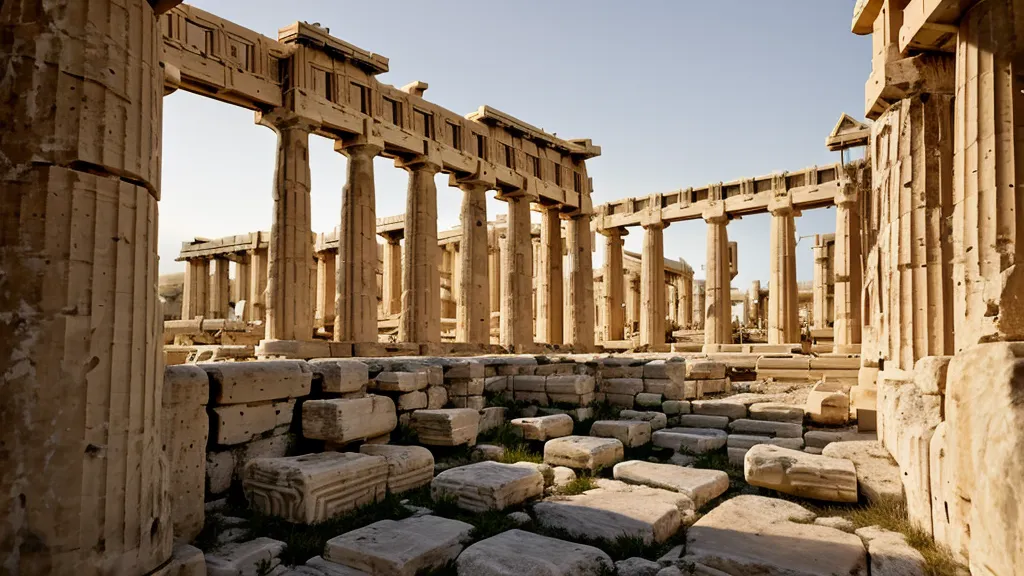
Marble throws light back harder than you'd expect, and at summer midday the Parthenon's Pentelic marble turns into a flashbulb pointed straight at your lens. I'm crouched behind a fallen column drum on the Acropolis summit, watching the histogram climb into a wall on the right side of the display, and there's no fixing this later at the desk. Athens punishes photographers who show up on vacation time instead of light time, and most advice about this piece of Greek cultural heritage (book early, dress light, carry water) skips the one detail that actually decides whether the shot exists: which hour you're standing on that rock.
The Marble Doesn't Forgive Midday Light
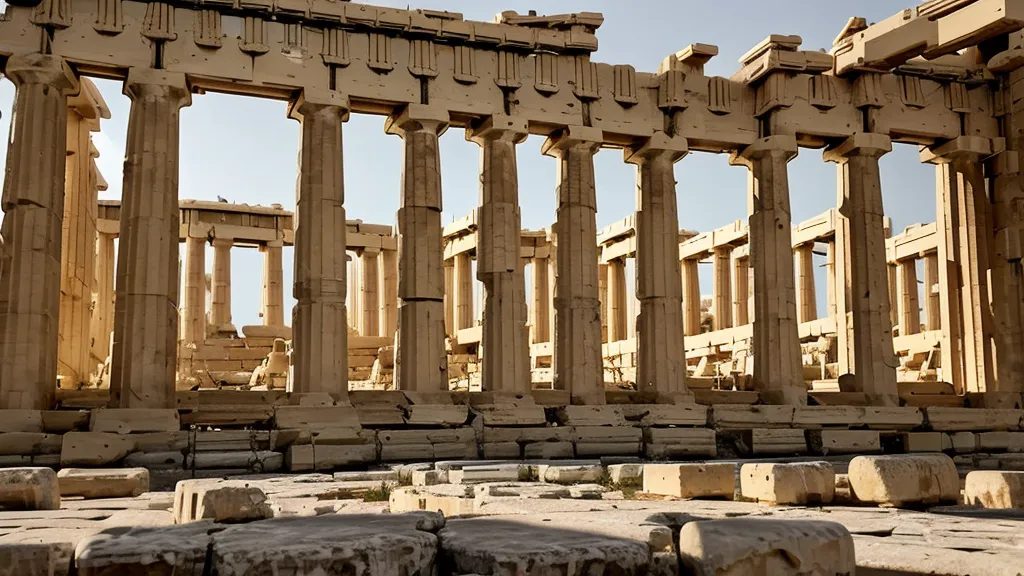
Texture is the first casualty. The fluted columns, cut starting in 447 BC and still carrying every chisel mark, need raking light to read as anything but flat white sticks; the overhead sun at noon flattens all of that within about twenty minutes of the gates opening wide. By midday the heat haze over the summit does to the stone what a passing boat does to a canal's reflection at a lock in Amsterdam: the surface breaks apart into shimmering fragments, and whatever texture you came for is gone before you can focus on it. A site this size can't be covered in one pass anyway. The Parthenon alone carries 46 outer columns, the Erechtheion sits behind it with the Caryatids, and the Propylaea gateway is 18 meters of its own composition problem on the way in: decide which section gets your morning light and accept that the rest gets whatever's left by afternoon.
Booking Through GetYourGuide, or Taking Your Chances in the Line?
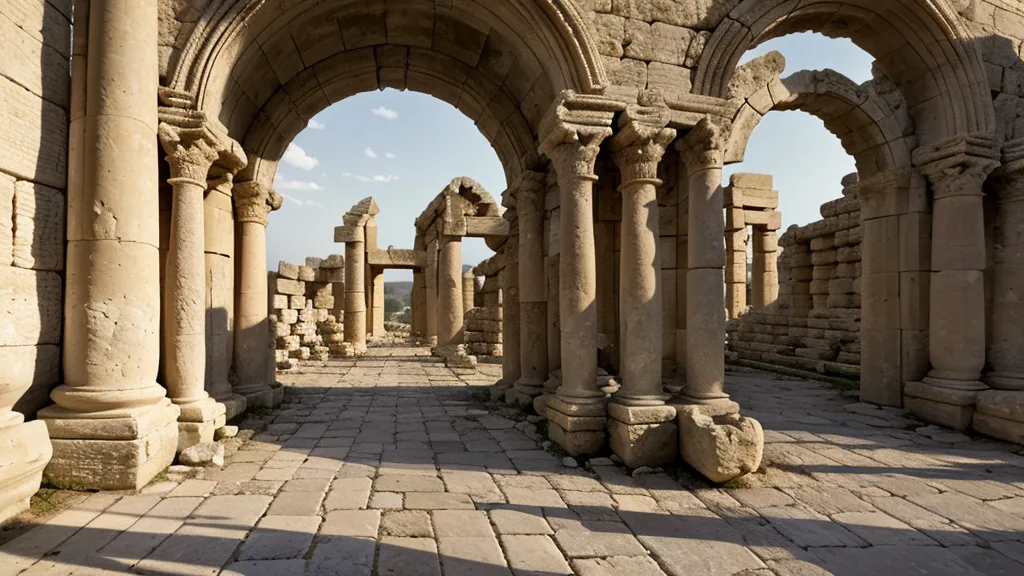
Skipping the ticket booth line matters less for the twenty minutes it saves than for what it does to your morning. A timed-entry slot booked through GetYourGuide gets you through the gate at opening instead of somewhere in the back half of a line that snakes toward the Dionysos Theater, and that gap is the whole game — the light at opening and the light an hour later aren't the same light. The combo ticket that bundles the Acropolis with several other Athens archaeological sites only earns its cost if you're actually working more than one or two of those sites on the same trip; it's the same math as a hop-on-hop-off bus pass elsewhere, worth it if you're hopping off more than twice, dead weight if you aren't. I tried the free walking tour route here once, forty of us bunched against the wind while the guide's voice got swallowed before it reached the back of the group; half of us never even heard which gate we were walking toward. A self-guided visit with a pre-booked slot hands you control over where you stand and for how long, and on a site where the usable light window runs this short, that control is worth more than any commentary.
Reading the Crowd Like a Transit Map
Foot traffic on this rock behaves the way foot traffic behaves anywhere else: it bottlenecks at pinch points and thins out the second there's an alternate route. The main viewing terrace by mid-morning gets shoulder to shoulder the way the Williamsburg Bridge pedestrian walkway does at evening rush, until someone peels off toward a side path and the density breaks. Athens' own metro, the Akropoli station two minutes from the entrance, does more useful work than any paid transfer; it's faster than a shuttle and it drops you closer to the gate than most of them do. Timing your entry against the crowd curve rather than against the clock is a lesson that keeps repeating city to city; I wrote about the same trade-off in Alcázar of Seville Tickets for Better Photos Without the Crowds, where the courtyards fill on a completely different schedule but the underlying shape (light peaks before the crowd does, then the two curves cross) is identical.
One Body, One Prime, and the Permit You Don't Have
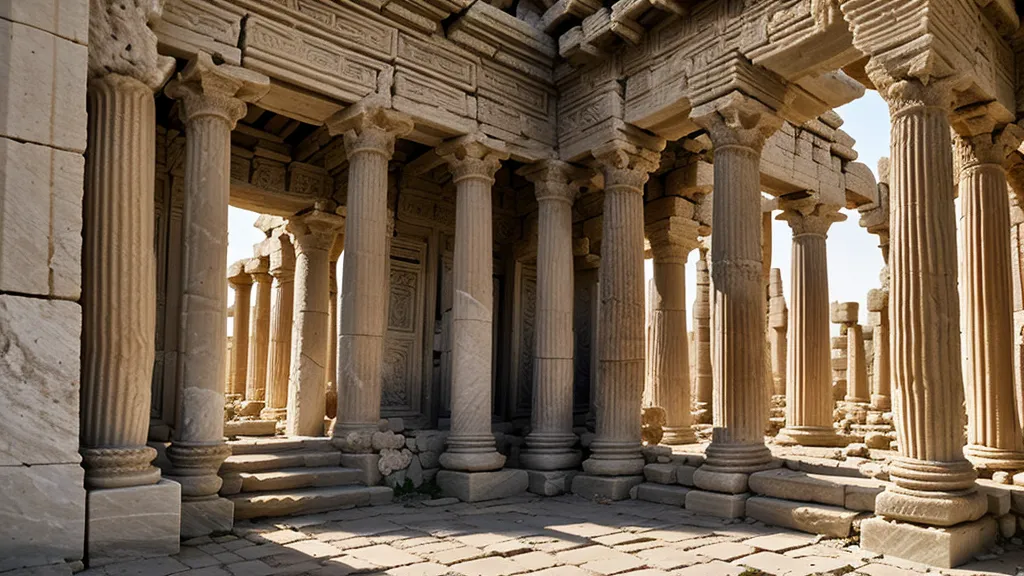
Professional tripods and full video rigs need a permit from the Hellenic Ministry of Culture that most visiting photographers never bother applying for, and hauling a tripod you can't legally deploy is just extra weight on a 156-meter climb in the heat. One body and a 35mm or 50mm prime is the whole kit, nothing else; the real gear question on a site with this much elevation change isn't image quality, it's whether your legs still work by the time you reach the Caryatids after the Parthenon. What's permitted and what's appropriate aren't the same question, either: a monument this old carries the kind of institutional weight a Dachau memorial or a cathedral nave carries too, and even where a rule technically allows something, the place tells you when to put the camera down anyway. Interior, climate-controlled sites are a different problem entirely. I ran into a similar mismatch between gear and environment at the Guinness Storehouse Tickets Dublin Review for Better Interior Photos, where the glass was the obstacle rather than the light, but out here on bare marble, managing the light is the entire job.
Vantage Points Beyond the Rock Itself
Where you sleep matters almost as much as when you book. A room in Koukaki or up toward Plaka with even a partial Acropolis view turns one golden hour into two separate shoots without fighting a single queue: one from the rock at opening, one from a rooftop at sunset, neither requiring a ticket. Lycabettus Hill does the same job a double-decker's top deck does in other cities: an elevated, fixed vantage that needs no slot booked at all, just a walk up at the right hour. I've shot an illuminated landmark at night from a moving vehicle before, on a tour bus in a different city, and that trick doesn't transfer well here. The Acropolis at night is lit static and cold compared to what a slow pan from a moving platform can pull off elsewhere, so don't expect the same move to work twice. If you're routing a longer Greek itinerary that includes a day trip to Delphi or Cape Sounion, settle on your transfer mode before you settle on your shot list; a rental car buys you golden-hour flexibility that a scheduled coach never will, and on this itinerary that flexibility is worth more than it would be somewhere flatter.
Eight years into shooting circuits like this one, the ticket-timing logistics beat every other variable on this site: lens choice, filter, tripod, all of it secondary. If you only take one rule up that hill: book the first slot of the day, skip the group tour, and have the discipline to leave before the stone turns back into a flashbulb. Weston Arambula, a friend who won't commit to a shoot anywhere without cross-checking three sunrise-time apps against each other, would tell you the same principle holds whether you're in Bangkok or standing on this limestone plateau — the light window sets the booking, not the other way around.