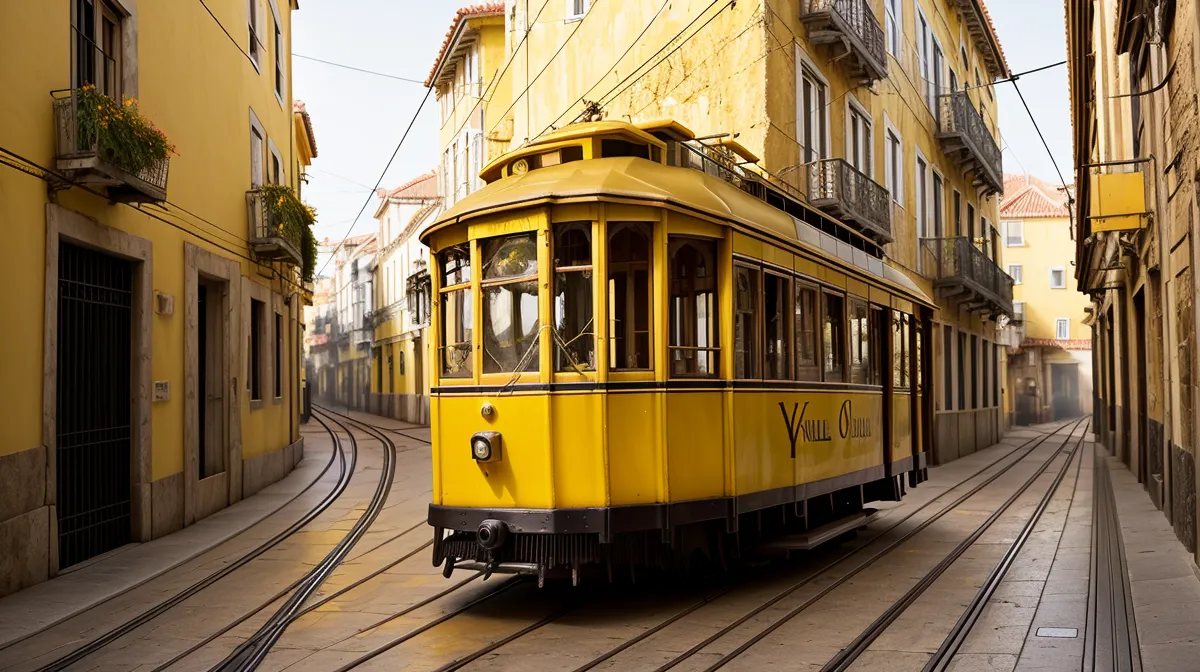
Thirty-eight stops. That's how many the E28 line makes across Lisbon, and for street photography maybe six of them are worth getting off at. The rest is queue, sway, and a window smeared with a hundred foreheads. Tram 28 is the most photographed piece of moving metal in the city, and also one of the worst spots on the whole route to actually get a usable frame.
Every test in this piece happened on my own card, not a press trip, and the commission from a couple of tour links below doesn't change which stops made the cut.
Riding the Whole Line vs. Working a Fixed Point
The E28 is a seven-kilometer masterclass in urban navigation, and riding it end to end for photography is a logistical trap. Two hours pinned against a scratched window gets you nothing when the best light is happening outside, near Chiado, while you're stuck in traffic. The tram itself is a relic built for a city that never expected four million visitors a year, and inside it you're cargo, not an observer.
Doors on the 28E sealed shut at Graça around a quarter to four one gray afternoon, two feet from my shoulder, and the paper notice taped to the pole said the next car wasn't due for another hour. That's the whole problem with treating the tram as transportation instead of a subject: the schedule runs the shoot, not you.
Instead of fighting for a seat among those thirty-eight stops, book a specialized walking tour through GetYourGuide [Editor's Pick] that sticks to the Alfama and Graça curves. You're paying for the shortcut to the vantage point, not a history lesson.
The Alfama Curves Are Where the Math Flips
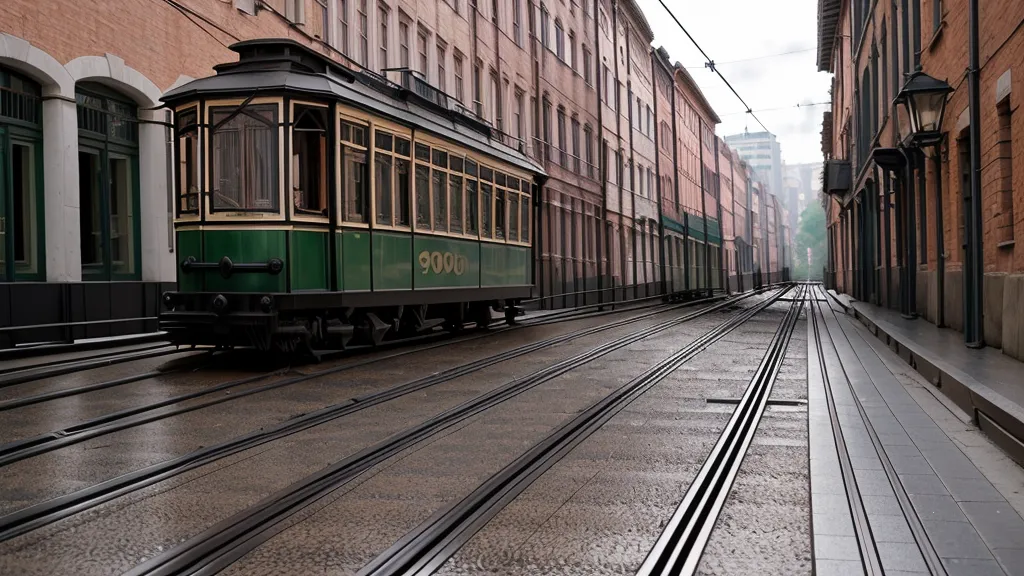
The magic of the 28 isn't in the straightaways, it's in the tight twelve-meter radius curves of Alfama, where the tracks squeeze the old cars through alleys narrow enough to touch the paint from a bedroom window. Shoot wide from the corner of Rua das Escolas Gerais and the mid-afternoon light backlights the dust the tires kick up. Nobody's fighting you for that corner, which is the whole point.
This is more useful for photographers than Big Bus Tours [Best for First Visits], which is built for a first-timer's overview and can't get into these narrow veins of the city. I've made the case elsewhere for why GetYourGuide works from a photographer's perspective, and Lisbon might be the cleanest proof of it.
Where you stay can double as a vantage point too, a room I booked in another city once, purely for the rooftop view, ended up worth more than the guided tour I'd paid for that same week. My colorist, Fumiko Odell, flagged a blown highlight on the tram's roofline in one of these Alfama frames that I'd missed entirely, squinting through a viewfinder in hard afternoon glare.
From the Portas do Sol terrace at blue hour, the Tagus flattens out enough to hold the lit hillside upside down in the water, worth the wait even with no tram in the frame. The economics of a hop-on-hop-off ticket shift once the sun's down too, which is the whole reason I once booked a night loop through London instead of the daytime version, half the value there is in buildings you can't even see at three in the afternoon.
Is a GetYourGuide Walking Tour Worth Booking for This
Reading a queue is the same skill everywhere, the read I use on a slow line outside a European basilica works just as well on a tram platform at Martim Moniz, you're gauging whether the wait actually buys you anything. Timing the light matters here the same way it does mapping a hop-on-hop-off loop through Paris for the last usable rooftop glow before dusk. I bought a city tourist card once, in a different country entirely, that expired before I'd reached the third attraction on the list, the same break-even math that makes one city's attraction pass worth it and another's a waste, since the coverage tiers vary enough by city that a blanket recommendation isn't honest.
Pack Light for a 14 Percent Gradient
One lens, one body is the only rule that's survived eight years and 32 cities of testing this stuff, and it matters most on a fourteen percent grade. I stick to a 35mm prime, wide enough for the street work without warping the tram's face into a fisheye cartoon. Skip the tripod entirely, Lisbon hands you a better one for free in the waist-high walls and bollards scattered through Graça near the Miradouro da Senhora do Monte, exactly where you'd brace for a slower shutter as the tram rounds the bend anyway. The grade there isn't far off from hill sprints on the McCarren Park track back home, except cobblestones don't forgive a rolled ankle the way rubber does.
Handling that kind of high-contrast, blown-highlight light gets a longer breakdown in Mastering the London Softbox, and most of it transfers directly to a Lisbon hillside. Shooting neon at night from a moving bus in Vegas taught me a version of the same lesson: brace against the frame itself, since there's rarely room to plant a tripod anyway.
A reader named Leotis Chambers, who's worked through three of my itineraries by now, still plans his routes from printed screenshots instead of pulling up a live map on his phone, and for the 28 that's not a bad instinct. Signal drops out in enough of the Alfama alleys that a printed timetable won't lie to you the way a spinning loading icon will.
The Four Stops Worth Getting Off At
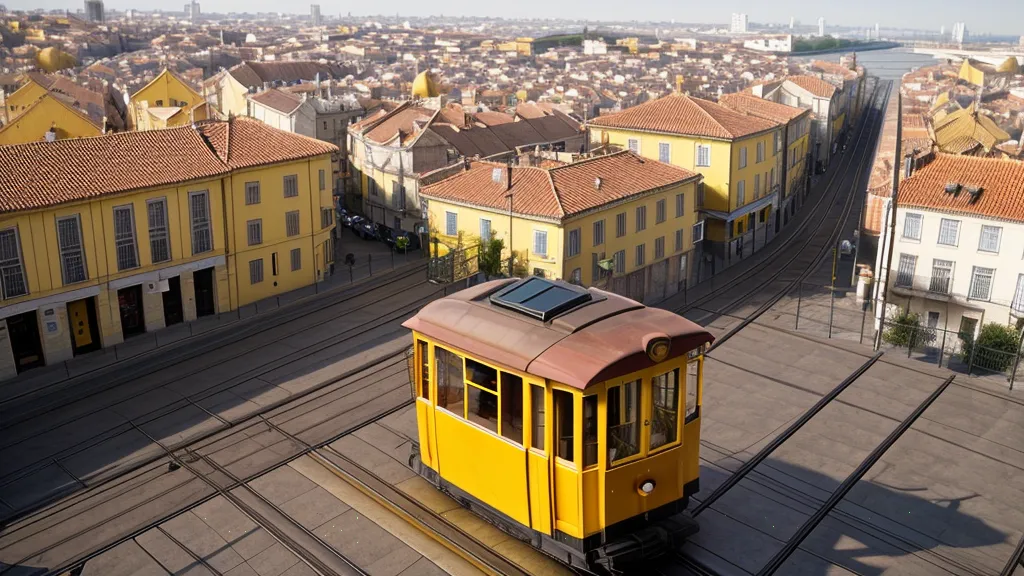
Four stops are worth the walk. Graça gives the widest environmental frame, with the castle sitting in the background if you angle for it right. Portas do Sol is the classic postcard curve, but only from the elevated terrace, street level just gets you a wall of tourist heads blocking the rails. Rua da Conceição is where the tram cuts through the Baixa grid, and a long lens compresses it nicely against the flat, colorful facades lining both sides. Estrela marks the end of the line, or the start, depending which direction you began, and the basílica's white stone throws light back onto the tram in a way none of the other stops manage.
So Which Approach Actually Gets You the Shot
Ride the full route if the transit experience itself is the point, the actual feel of a 1930s car groaning up a hill with thirty-odd strangers pressed in around you. Work the fixed points instead if the photograph is the point: six stops, timed against the light and the curve radius, beat two hours pinned against a scratched window every time. That's the whole trade, riding it for the experience against chasing it for the shot, and only one of those fills a portfolio.
Late autumn through early spring is when the choice gets easier anyway. The light comes in lower, the queues thin out, and either approach works without a fight.
If you're mapping a Lisbon trip around this, start with GetYourGuide. Their mobile tickets hold up even on the patchy WiFi you get in the older parts of Alfama, which is one less thing standing between you and the next fixed point.