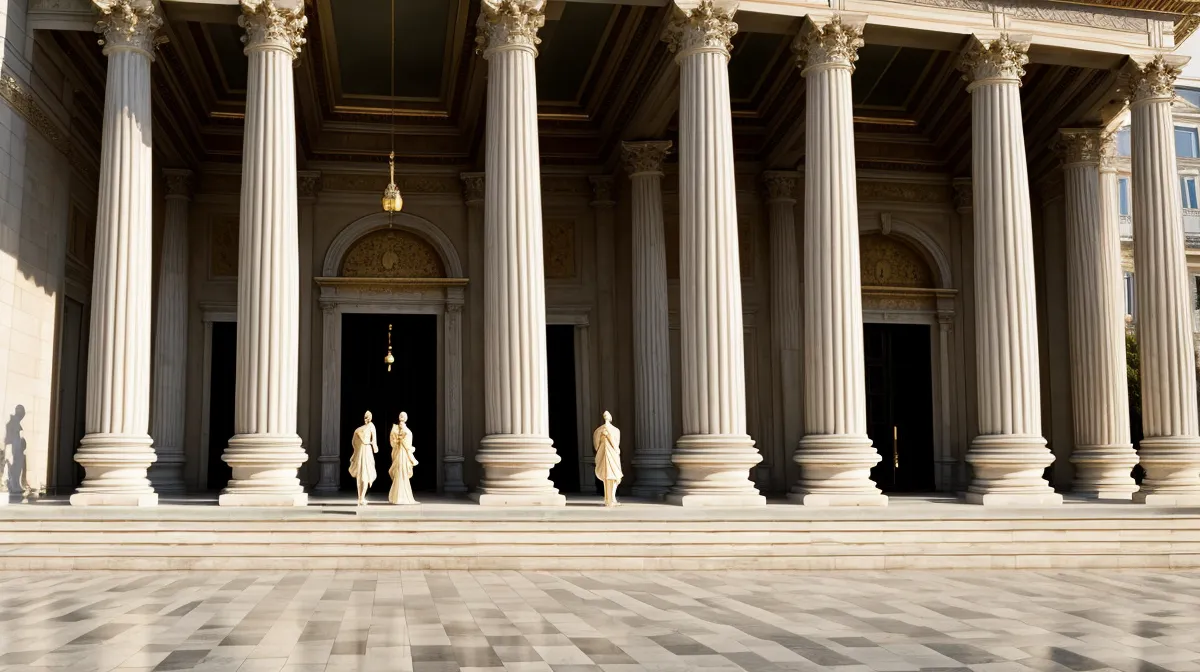
A GetYourGuide voucher on my phone got me past the Goya entrance in under four minutes. The general-admission line at the ticket office, when I walked back past it two hours later, still hadn't moved past the corner. That's the entire story of booking Prado Museum tickets in Madrid, and it's why any honest museum review of this place has to work as a photography-logistics guide first and an art critique a distant second.
I'll say upfront that a few of the travel booking apps and tour operators covered on this site pay me a small commission if you book through my links, this piece included. It doesn't change what I tell you about which line was worth standing in. I only link to the GetYourGuide ticket because it's the exact voucher I used to skip that Goya line, not because it's the cheapest option on the market.
How the Ticket Options Actually Stack Up
Booking through the official Prado site sounds like the responsible move until you're staring at a Spanish-only checkout page while your hotel WiFi drops for the third time. That's the failure point most people don't plan for. It isn't a subway missed by seconds, it's a slower kind of stuck, and it eats the exact hour you meant to spend photographing the facade before the light turned flat.
The reason I chose to book through GetYourGuide instead came down to flexibility, not price. A mobile ticket sitting in my phone's wallet meant I could rearrange the whole morning around the weather instead of around a printed time slot. Overcast, and I'd head straight inside. Clear and cold, and I'd stay out shooting the exterior first, then walk into the galleries once the light outside had gone flat anyway.
That flexibility is really a guided-versus-self-guided call in disguise. A live tour locks you to someone else's pace and someone else's script, while a self-booked digital voucher lets you follow the light instead of a group leader's flag.
Why Does a Skip-the-Line Ticket Still Mean a Full Bag Search?
Security doesn't care what kind of ticket got you to the door. Even with a confirmed skip-the-line voucher, the baggage scanner is the actual equalizer inside the Prado, and it's where I lost the ten minutes I thought I'd banked. My camera bag — loaded with a 24-70mm and a couple of fast primes — set off a review I hadn't budgeted for, while everyone shooting on a phone walked straight through.
It's the same gear-load call I run before any walking tour with a bag full of glass: carry less than you think you need, because every extra body and lens is one more thing a guard has to open and re-zip while the line behind you waits. A tripod doesn't even make it past that first conversation — the guards here have clearly had this argument before.
The No-Photography Rule Forces a Different Kind of Scouting
Inside the galleries, cameras stay in the bag by museum policy, full stop. That rule turns a visit into pure observation: no test shot of a skylight, no quick reference frame for an assistant back home, just eyes doing the entire job a sensor usually does. Standing under the room that holds Las Meninas, all I could do was note the color temperature of the shadow and try to hold onto it in memory instead of a RAW file.
That's a queue-strategy problem as much as a photography one. A free walking tour I joined outside a different museum once had forty of us packed around a single guide holding up a laminated sign, and I caught maybe one sentence in three over the wind and the crowd noise.
Weston Arambula, a friend who shoots travel across Latin America and Southeast Asia, keeps an actual spreadsheet of every guided tour he's paid for out of pocket, rated on whether the information matched what it cost. I don't track it that formally, but the instinct holds: a ticket that gets you in fast is only half the equation if you can't hear anything once you're inside.
I learned the other half the hard way outside the Sagrada Família in Barcelona, stuck at the wrong end of a timed-entry line that had wrapped half the block while my actual entry window quietly closed. A ticket is only as good as the queue math behind it, and that math is different in every city.
General admission alone runs 15 to 20 Euros depending on the day, which is cheap for what you're getting. Actual photography permits are a slower, separate process, typically requiring months of lead time most scouting trips don't have. For a place where the camera stays zipped the whole time, treat the ticket as a mental mood board instead, and if you want somewhere the camera is actually welcome, my notes on Best Prague Castle Tickets for Morning Views cover exactly that kind of stop.
By the fourth hour of museum gait - that slow, shuffling walk that does more damage to your lower back than an actual hike - my legs had the same dull ache I get after too many laps on the McCarren Park track back home. Standing still while moving slowly turns out to be worse than just walking normally. Nobody warns you about that part.
Timing the Exit Around the Light, Not the Crowd
The real value of a digital ticket shows up on the way out, not the way in. Mid-morning is when the noise floor in the galleries climbs high enough to make close looking difficult, and skipping the ticket-office line means you never built up the sunk-cost pressure to stay until closing just because you queued for it. Once I'd studied what I came for, there was no reason to keep standing there.
Retiro Park sits close enough to walk straight into the golden hour. The Paseo del Prado and the park were named a UNESCO World Heritage site in 2021, and the neoclassical facade earns that status once the low sun hits it — wide for the scale of the building, tele for the texture in the stone. It's a completely different kind of frame from anything inside, one where you're the only curator involved.
That's the same golden-hour routing decision that determines which stop I get off at on a hop-on-hop-off route in Paris: chase the light, not the itinerary. On the ground, the Prado is a straightforward walk or a clean ride to the Banco de España metro stop, and that short transfer does the same job a formal tour bus does in cities where I'd rather ride tram 28 in Lisbon than book a guide.
Comparing Travel Booking Apps for a Single Museum Visit
Big Bus Tours works well for scouting unfamiliar layouts in other cities, and the economics hold up the same way everywhere: you're paying for a fixed loop and a seat, and it pays off when the alternative is figuring out three separate transfers on your first afternoon. It's a different exposure problem after dark too: shooting neon through a moving window on a night route needs a completely different shutter approach than standing still in a Madrid gallery ever will. For a single target like the Prado, though, a big bus route trades away exactly the itinerary control a small, focused group gets on something like a Tuscany wine tour, and that trade isn't worth it here.
CityPASS-style bundles can work if you're hitting four or five major attractions back to back, but the coverage tiers only exist in nine US cities plus Toronto, so it's off the table for a Madrid trip entirely. That's the same break-even math I run before buying any multi-attraction pass: count what you'll actually visit, price it against buying each ticket separately, and only bundle when the number of stops justifies it. For one museum, a standalone ticket is the sharper lens — narrower in scope, but better suited to what it's actually doing.
The reliability argument is what settles it for me. GetYourGuide covers something like 16,000 destinations and 75,000 activities, which is part of why the app keeps working on patchy foreign WiFi when a browser checkout won't load. Across dozens of bookings, I've had exactly one operator no-show, and free cancellation up to 24 hours has saved more than one morning when a shoot ran long and the schedule had to shift. The trade-off is that the same ticket sometimes runs a little cheaper at the operator's own counter — the small premium buys the version that doesn't depend on a foreign-language checkout page working correctly on the first try.
None of this replaces actually standing in front of the paintings, which is still the entire point of the trip. Book the digital voucher, get there before the doors open, and budget the bag search into your morning instead of being surprised by it. And if a museum where the camera is genuinely welcome sounds better after a day of museum gait, my guide on Best Hotels in Osaka for Photography Access covers cities where the no-photo sign is a lot rarer.
The Prado stays a masterclass in lighting even with the sensor locked in a cubby downstairs. Just leave the tripod at the hotel — the guards have seen enough carbon fiber to last them a career, and that particular conversation never goes the photographer's way.
GetYourGuide
Pros
- + Zero-friction entry when the light is changing
- + Digital backup for when paper tickets get lost in the gear bag
- + 24-hour cancellation for when a shoot runs over
- + Reliable mobile app works on patchy Madrid WiFi
Cons
- ○ A few euros more than the direct kiosk price
- ○ Third-party listings can sometimes feel generic