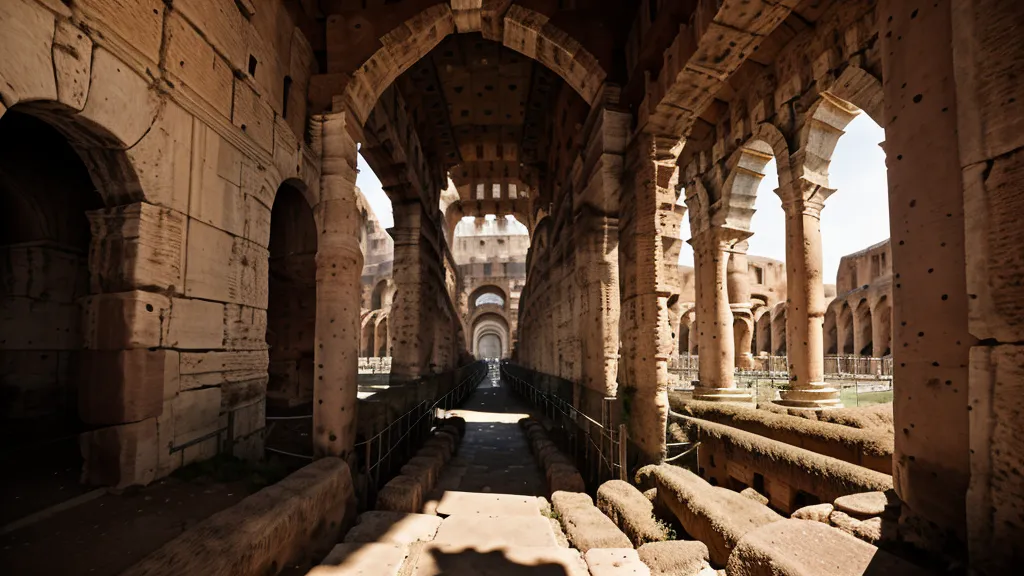
A general-admission Colosseum ticket gets you the view every phone in the piazza already has; the underground ticket gets you time in a room most of those phones never reach. That's the whole case for booking a Colosseum underground tour over the standard loop, and it took most of a season testing GetYourGuide slots against the official ticket lottery to actually believe it. Eight years of shooting other people's itineraries for a living will do that to you — you stop trusting the easy version of a ticket until you've stood in the hard version with a camera in your hand. I'd gone to Rome chasing travel photography of classical stonework, and the hypogeum, the gladiator holding pens and hoist shafts under the arena floor, was the one frame I couldn't get standing in line with everyone else.
Noon at the Colosseum Is a Lighting Problem, Not a Weather One
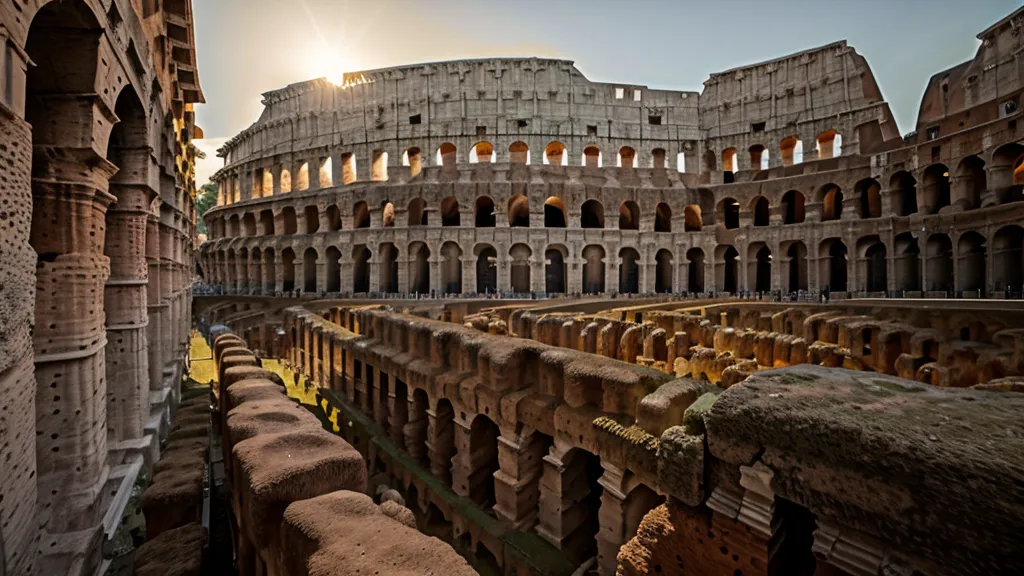
Step off the B line at Colosseo around lunchtime and point a camera at the outer ring, and you'll see what I mean. Travertine limestone throws Mediterranean sun straight back at your sensor — highlights blown to white, archways sunk into black, nothing usable without bracketing five frames and stitching them into something that still looks flat. It's the same blown-out light that wrecks every mural shot at the Bushwick Collective on Troutman Street on a cloudless Saturday, just with two thousand years of marble instead of spray paint.
General admission puts you on the upper tiers with everyone else, shuffling shoulder to shoulder toward the same postcard angle. That's not really a complaint about crowds so much as a complaint about light: the standard loop gives you one exposure problem, all day, with no way around it. The hypogeum, the underground network of holding pens and hoist shafts where gladiators and animals waited before a show, solves that by being a different lighting environment entirely — but you can't walk up and buy your way down there. Park rules require an accredited guide, the official release lottery online evaporates in seconds, and the one workaround that actually exists is booking a commercial underground-access slot through a platform like GetYourGuide.
Before I'd figured any of that out, I'd wasted a morning the dumb way — renting one of the audio guide handsets at the entrance kiosk. Dead on arrival. Batteries already flat before I'd gotten past the first set of arches, from however many hands had held that handset that week. Lesson absorbed: skip the kiosk rentals, spend on the ticket that actually changes what you can shoot.
Packing for a Tour That Doesn't Let You Set Up
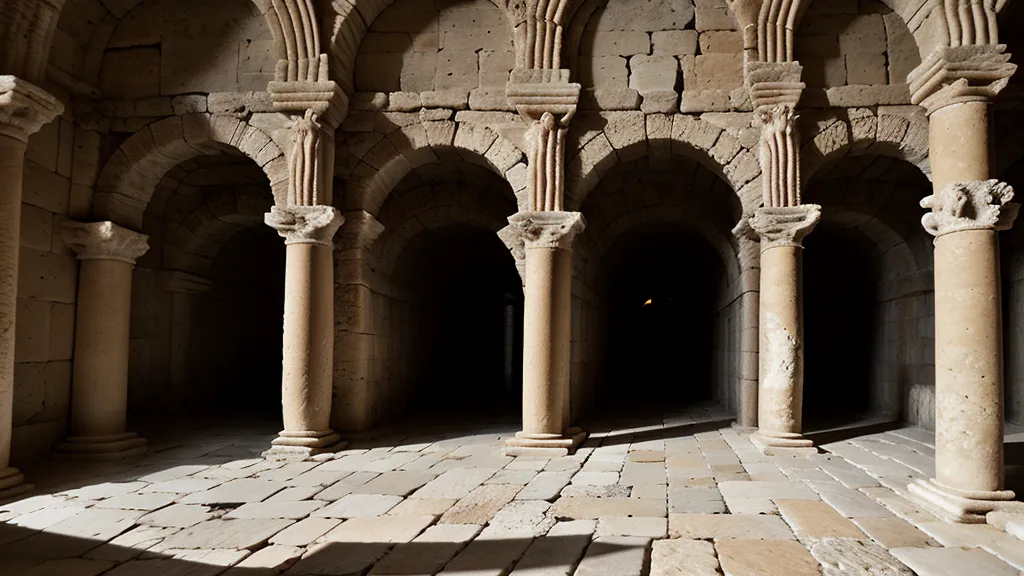
Security at the Colosseum checks bags with the thoroughness of an airport line on a holiday weekend, and tripods don't make it through — rigid legs are banned inside the archaeological park for anyone without a commercial filming permit negotiated months out. Monopods slip past some guards and get stopped by others; don't plan around luck. Whatever you shoot underground, you're shooting handheld.
Park rules also cap each hypogeum escort at twenty-five visitors moving together along a catwalk suspended six meters below the modern arena deck. Twenty-five people is nothing next to the crowds upstairs, but you still can't drift off to wait out a stray tourist in your background, and you can't stop the line behind you. A friend of mine, Weston Arambula — he works the Latin America and Southeast Asia circuit and will tell you about his prime lenses whether you ask or not — talked me into leaving the zoom at the hotel entirely. One body, one 35mm prime at f/1.8, nothing to swap over an open metal grate above a drainage channel where dropped glass just disappears into Roman dirt. That's really a gear-load problem wearing a lens-choice costume: on a moving tour you're not picking your sharpest lens, you're picking the one that keeps you moving with the group.
The staircase down resets everything. The street noise — scooters on Via dei Fori Imperiali, guides shouting over each other — drops away, and the air gets that mineral cold you'd get stepping into an empty nave a few minutes before a tour group catches up to you. I shot a similar low-light interior testing Guinness Storehouse tickets Dublin review for better interior photos, but that floor doesn't move. This one vibrates under twenty-five pairs of shoes, so bracing both elbows against my ribs for a slow handheld shutter became the default, ISO riding between 1600 and 3200, shoulder tucked against the masonry whenever the guide paused.
Why Does Afternoon Light Beat the Early Slot Everyone Swears By?
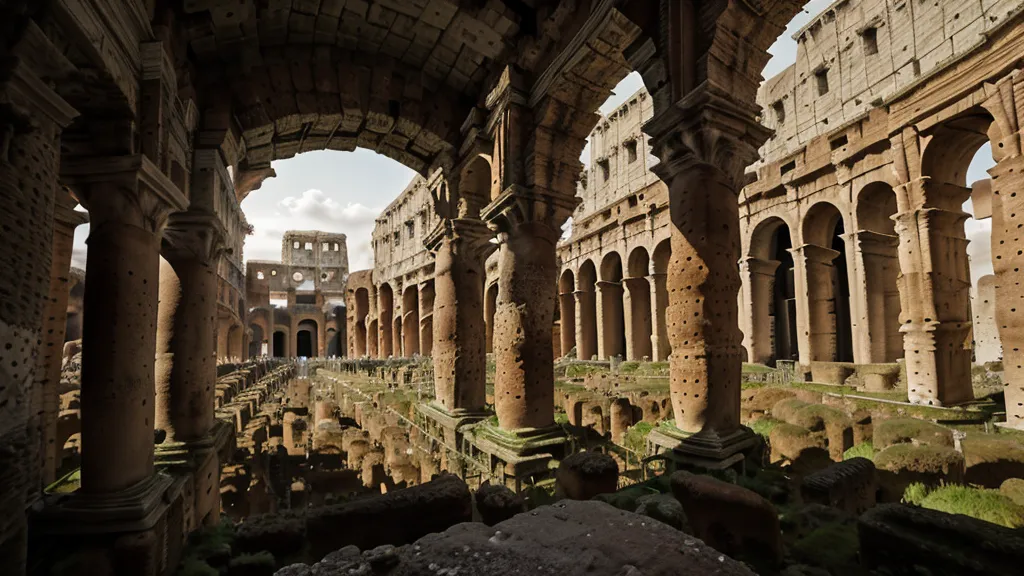
Every checklist says the same thing: book the first slot of the day, beat the crowds, catch the pretty light. Seven weeks into logging these guided slots for the series, I'd stopped trusting that advice for anything underground. Take the 7am slot, the one every list swears by — on a clear morning, low sun cuts across the arena at a steep angle and drops straight through the gaps in the reconstructed wooden floor like a row of spotlights someone left on. It looks dramatic standing there. On a sensor, it's a dynamic range problem no handheld frame survives: you either blow the sunlit patches to chalk or let the vaults around them go muddy and noisy.
Late afternoon is the opposite problem, solved. By then the sun has dropped behind the outer wall, the hypogeum falls into fully indirect light, and the preservation lighting along the catwalk does the rest, filling in midtones instead of fighting them. What you get is close to textbook chiaroscuro across the brickwork, soft enough that the mortar lines and chisel marks hold detail without heavy shadow recovery later. If the goal is texture over spectacle, skip the early release and book the slot nobody's rushing to grab.
What Shooting Someone Else's Itinerary Does to Your Travel Photography
A guided tour runs like a tight transfer between express trains — fixed departure, fixed pace, and if you fall out of step you're photographing the backs of twenty jackets instead of ancient architecture. My guide knew the history cold and spoke at a steady clip, but she was pacing the group for the lecture, not for anyone's shutter speed. This is the guided-versus-self-guided trade-off in one sentence: you give up control over timing, and in exchange you get the one thing the self-guided version of this ticket can't offer, which is legal access to a gated floor at all.
What works is hanging back instead of pushing forward. When the group bunches up around a lift shaft, I'd stay at the tail end, let the guide pull everyone's attention ahead, then turn and shoot the empty corridor we'd just walked through. Because access down there is staggered by park marshals, that stretch behind you usually sits empty for a few minutes before the next group arrives — long enough for a clean, human-free line down the spine of the hypogeum. I'd learned the same patience testing Acropolis of Athens tickets for photographers avoiding the midday heat, where a tightly controlled site rewarded spatial awareness over gear. Chest-height framing, eyes on the leading edge of each arch, and wait for the gap.
Is the Underground Ticket Worth the Trouble?
Hypogeum access is one of the more frustrating bookings in European travel — official drops sell out in seconds, and paying a premium through a third-party platform is really paying for access control, not history. You're buying your way behind a cap on visitor numbers instead of fighting the full tide of selfie sticks on the terraces above. I think about this the same way Ignacio Sousa, a reader out of Chicago, once broke down a city pass for me — he logs every euro of a trip to the cent and had worked out exactly which attraction he needed to hit before the pass paid for itself, pass-break-even math, basically, just applied to a single ticket instead of a bundle. I'd done a rougher version of that math myself on an audio guide once, standing at the third stop of a packed city-pass day while the little screen clicked over to track seventeen, already certain I wasn't getting through the list I'd planned.
For photographers the math is simpler than that. The underground gives you low, directional light and texture that doesn't exist on the sunbaked arena floor, full stop. Back in the loft in Gowanus where I edit everything — skylights taped over with diffusion film so the monitor doesn't fight glare, one wall gone under years of printed contact sheets — this was the rare set that didn't need a single frame rescued in post. Lens wide open, tripod left at home, ticket booked for the slot nobody wants: that's the whole formula, and it's the one lesson from this series worth repeating on every underground booking since.