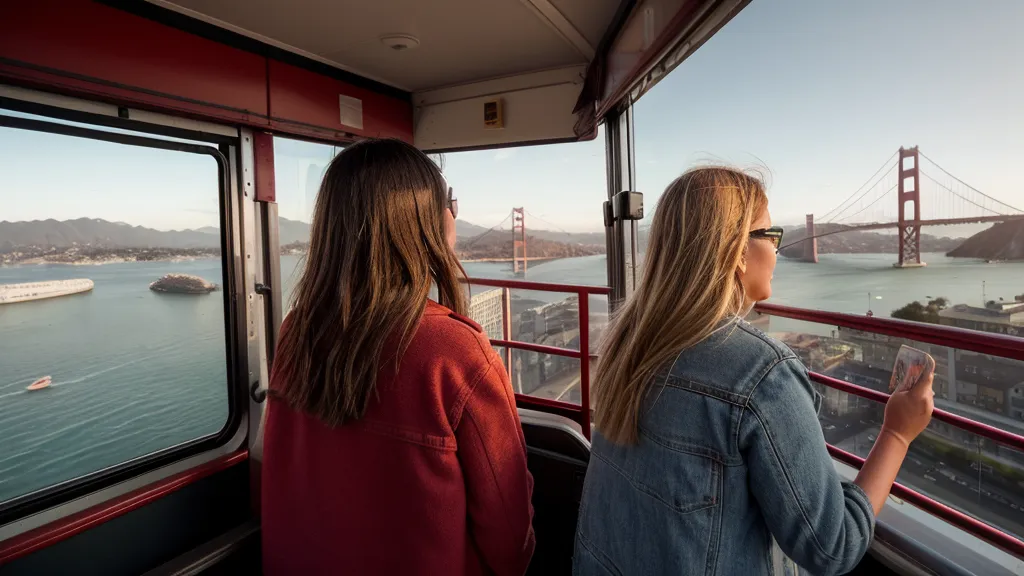
Four minutes into the Golden Gate crossing on Big Bus San Francisco's Red Route, the temperature on the open top deck drops by about ten degrees, and that one detail wrecks more shots than the fog ever does. Everyone assumes the top deck is the seat worth fighting for — open air, no glass between you and the towers. That assumption is the actual problem with most Golden Gate Bridge photos taken from a hop-on-hop-off bus, and it's worth correcting before you climb the stairs at Pier 39.
Editorial travel photography rewards elevation, and a double-decker gives you roughly ten feet of extra height you can't get from a rideshare idling on Lincoln Boulevard. Back home, the closest comparison I've got is shooting the Manhattan Bridge from the DUMBO waterfront — same cable geometry, same fight against wind and passing traffic, none of the marine layer rolling in behind the towers. San Francisco's version of that fight happens on wheels, and the Red Route treats the whole loop like a slow dolly track toward the one frame everyone boards the bus for.
The Myth That the Top Deck Is Always the Better Seat
The open top deck sells itself on arrival: no windows, no reflections, no stroller wheel jammed against your tripod leg. What it doesn't sell you on is the vibration. Once the bus clears the Presidio gate and picks up speed, a low hum climbs up through the bench and settles into your spine, and every expansion joint on the bridge deck adds a fresh jolt right as you're trying to hold a slow shutter steady. International Orange paint reads gorgeous in a still frame, but a handheld shot at anything slow enough to matter turns that color into a smear the moment the tires hit a joint.
Swapping decks fixes this without costing you the view. You lose the wind and the open-air shake, but the tower still fills the window, and 746 feet of steel above you reads even more vertical from a seat that isn't rattling. When I sent the folder from this crossing to Fumiko Odell, who handles the color pass on most of my editorial sets, she flagged the lower-deck frames before I'd said a word about which ones I preferred. Sharper files just grade cleaner — a slightly awkward composition survives that process, a vibration-blurred one rarely does.
The Real Value Kicks In After Stop Eleven
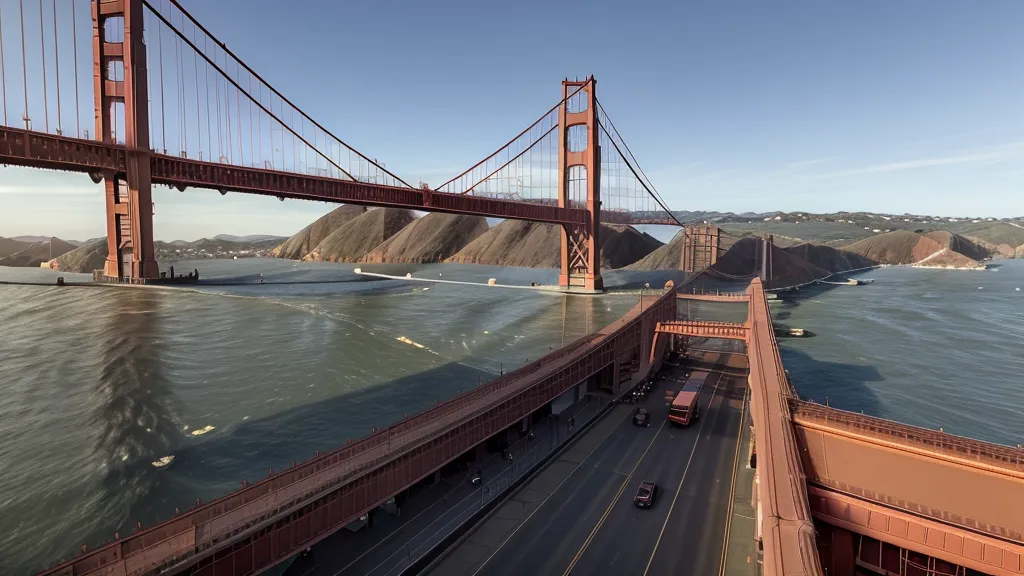
Big Bus San Francisco's Red Route runs twenty stops as one long city loop — I paid $62 for the ticket last March — and the honest version of a route guide admits most of those stops are transit, not destination. Fisherman's Wharf, Union Square, Haight-Ashbury, all worth a look, none of them the reason you booked this particular tour. The route earns its price somewhere past stop eleven, once the bus leaves the Presidio and the density of the Marina drops away behind you. Keep your eyes on the left side of the bus here, not the water — the road curves through eucalyptus and grass in a way that stacks leading lines toward the towers before you've even seen them clearly.
A route guide is only useful if it tells you when to stop paying attention, and most don't. I used to carry a paper guidebook on trips like this, boarding a few minutes before nine with no queue-time estimates printed anywhere in it, just a flat list treating stop four and stop fourteen as equally important. That's backwards for this route specifically. The first ten stops are context. The back half is the payoff, and nothing in a paper map tells you that.
What Actually Happens the Second You Hit the Golden Gate Crossing?
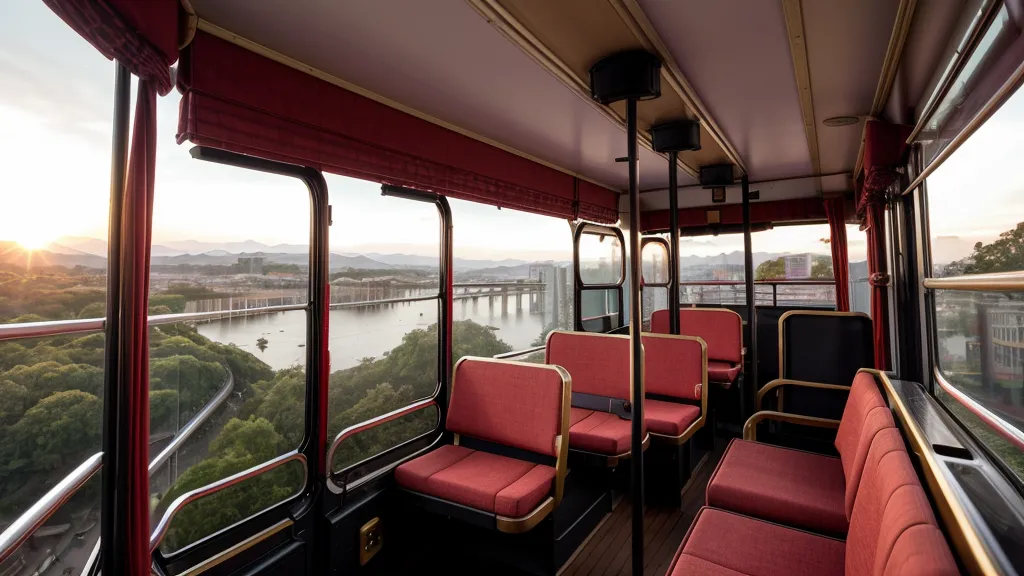
Physics, mostly. The bridge runs 1.7 miles end to end, the bus holds close to the 45 mph limit once it's on the span, and the two towers rise 746 feet above the roadway — tall enough that a wide lens still can't hold the full height from the lower deck without backing off the frame. The temperature is the part nobody warns you about: sunny and mild in the Presidio, then a hard drop the instant you cross into the shadow of the first tower, cold enough that the layer you left folded under your seat at Union Square stops being optional.
I've shot noon light bouncing hard off wet cobblestones in Rome, glare kicking off every puddle so bright it felt like standing inside a mirror, and this is the opposite kind of difficult. The fog out past the headlands — Karl, to anyone who's spent enough time here to give it a name — doesn't blind you the way that Roman glare did. It softens everything evenly, which sounds easier to shoot until you realize you've lost most of your contrast and the cables read flat instead of sculptural.
Don't Get Off at North Vista Point Too Soon
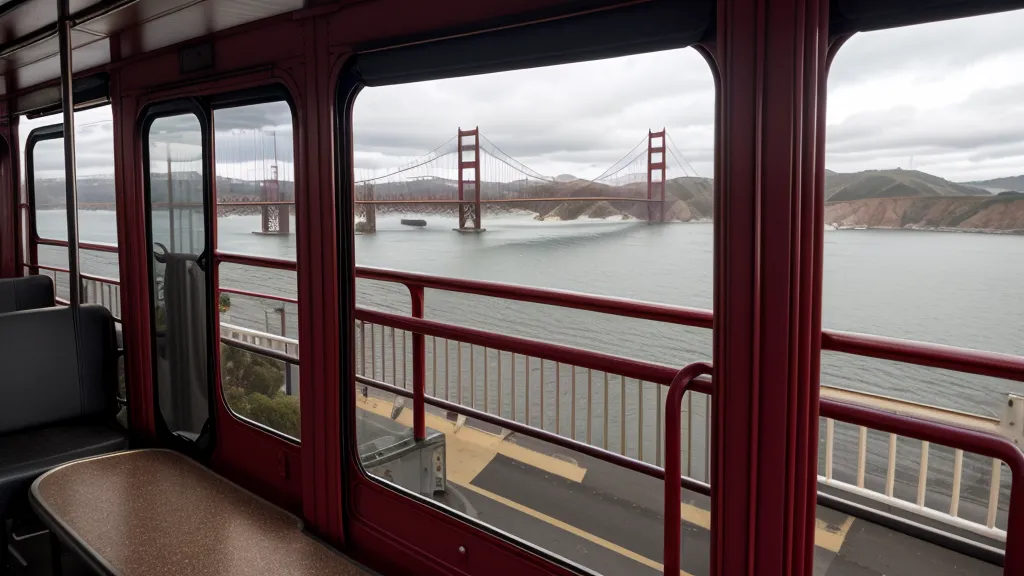
Most riders jump off at North Vista Point, get the standard shot with the skyline behind them, and wait for the next bus back. Stay on instead. As the bus pulls back out toward the return leg, it swings out over the water at an angle no pedestrian on the bridge sidewalk can reach, looking down at the tide churning turquoise around the base of the towers against all that orange steel. That's the frame worth the fare, and it only exists for the few seconds the bus is making that turn.
A reader named Leotis Chambers, a retired high school teacher from Atlanta who's since worked through three of my other city itineraries after first commenting on this exact route, pointed out something I'd genuinely missed: the signage at the North Vista Point stop doesn't clearly mark which side of the platform the return bus loads from, which matters a lot more if you're managing a wheelchair or a stroller than it does for someone juggling a camera bag. He's right that most of us scroll past details like that. Worth checking before you commit to staying on for the return leg.
Timing helps more than any of this. The same golden-hour routing trick that works on the Paris hop-on-hop-off loop applies here — plan your ride so the bridge crossing lands in the last ninety minutes of daylight instead of the flat middle of the afternoon, and the return leg into the city turns the Financial District towers into something worth the telephoto you packed.
So Which Seat Should You Actually Book?
Lower deck for the crossing, upper deck for everything before and after it — that's the actual rule, not "always ride up top" or "always ride down low." Big Bus San Francisco doesn't advertise it that way, because a mixed answer doesn't fit on a ticket brochure, but the correction is simple enough to remember: match the deck to the segment, not the whole day.
A few notes from testing similar setups elsewhere, since people ask. Whether a city pass breaks even depends entirely on how many stops you'll actually use it for, and for a single-focus ride like this one, a standalone ticket usually clears that math faster than folding it into a bundle. Queue strategy matters enormously somewhere like the Vatican and barely at all here, since this is a bus you show up for rather than a line you stand in. Hop-on-hop-off economics shift once the sun goes down too — I found that testing the London night loop — but San Francisco's Red Route is priced for a full daytime circuit, not a quick four-stop hop. Multi-attraction pass coverage varies by city as well; San Francisco doesn't bundle Big Bus tickets with museum admission the way some cities fold their transit passes into everything else. Sometimes the better vantage point isn't a bus at all — a high floor in Shibuya beats any bus route for skyline work, though nothing in San Francisco's hotel stock overlooks the bridge quite that directly. And shooting neon from a moving vehicle at night, which I tested on the Las Vegas loop, needs a completely different brace-and-expose approach than anything on this route, since the Golden Gate crossing here happens in daylight.
None of that changes the main correction. Book the Red Route, ride the top deck until the bus climbs into the Presidio, then move down for the actual span. I've vetted enough of these guided experiences at this point — see my GetYourGuide review after 32 cities — to say the seat matters more than the ticket type. The bus gets you to the right height. What you do with the ten feet is on you.