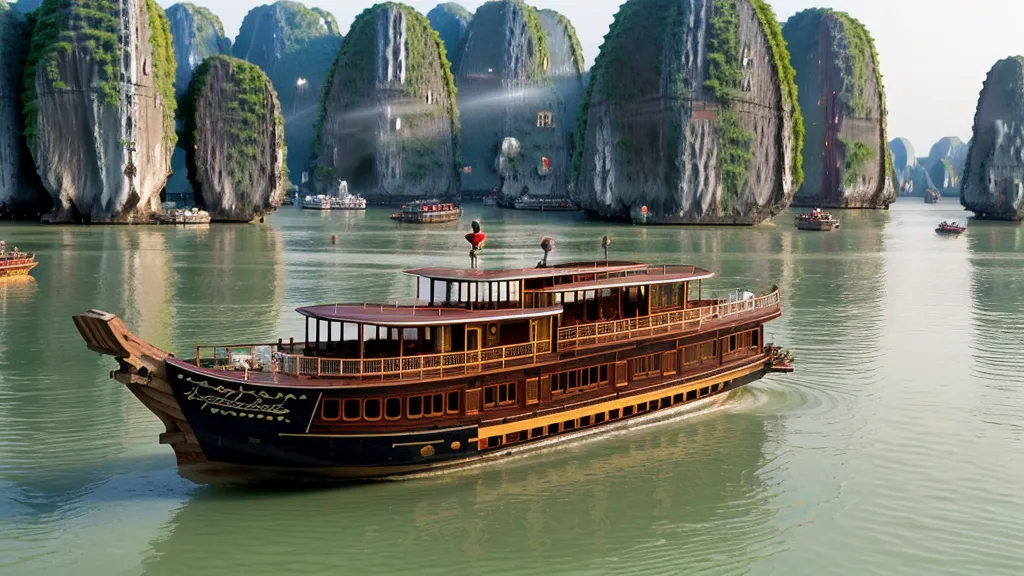
Four hundred concrete stairs. That's the climb to the viewpoint gazebo on Ti Top Island, shared with whatever few hundred other passengers got dumped at the same dock in the same ten-minute window. Every tour operator out of Hanoi sells that climb as the shot, the kind of frame that ends up on every Vietnam travel feed by the dozen. Here's the misconception worth correcting before you book anything for travel photography in this bay: that any cruise leaving Hanoi delivers roughly the same light, the same water, and the same picture. It doesn't. The pier you leave from and the route your boat is licensed to run change the photo more than whatever lens you packed.
Getting past that myth meant booking day trips and overnight runs out of Hanoi through GetYourGuide and treating each listing like a separate transit line instead of one interchangeable product.
The Myth: Any Cruise Out of Hanoi Gets the Same Shot
Start with the part nobody mentions in the marketing copy. Every commercial cruise in this corridor begins on asphalt, not water. The drive from Hanoi's Old Quarter to Tuan Chau Port runs close to 150 kilometers on the newer expressway, down from the four-hour slog operators used to quote before that road existed. A faster highway sounds like a win. It isn't, not for light. Because the transfer is quick, dozens of operators now leave the Old Quarter in the same narrow morning window, which means you arrive at Tuan Chau Marina at the exact same minute as fifty other buses.
It's the same crush as a weekend softball league wrapping up in Prospect Park, forty people funneling through one gate at once, except everyone here is also hauling a dry bag and trying not to drop a phone off the tender. You transfer from an air-conditioned van straight onto a boat, and the whole flotilla casts off together. That puts you on open water right around midday, when the sun sits straight overhead and flattens the limestone into a gray wall with no texture left in it. The bay holds something like 1,600 islands and islets under UNESCO protection, and a standard day-boat route manages to funnel all of that scale into one crowded, over-scheduled corridor.
I'd felt that particular locked-out feeling before, standing at a hop-on-hop-off stop in Paris where the schedule board promised a bus that had already rolled past, the one that would have put me on the water in decent light instead of flat midday haze. Tour timetables everywhere get built around moving the maximum number of people, not around where the sun happens to be. Halong Bay just makes that harder to ignore because the subject is a hundred square kilometers of water and rock instead of one building.
Pick Lan Ha Bay Over Halong's Headline Route
Most bookings default to what the local maritime authority calls Route 2, which hits Sung Sot Cave, the Ti Top viewpoint, and Luon Cave for kayaking. Fine if you're collecting postcard stops. Rough if you're trying to get a clean composition with a telephoto. At Ti Top, the four hundred stairs mentioned earlier dump you onto a summit gazebo shoulder to shoulder with selfie sticks, looking down at a bay full of identical steel hulls idling in slow circles.
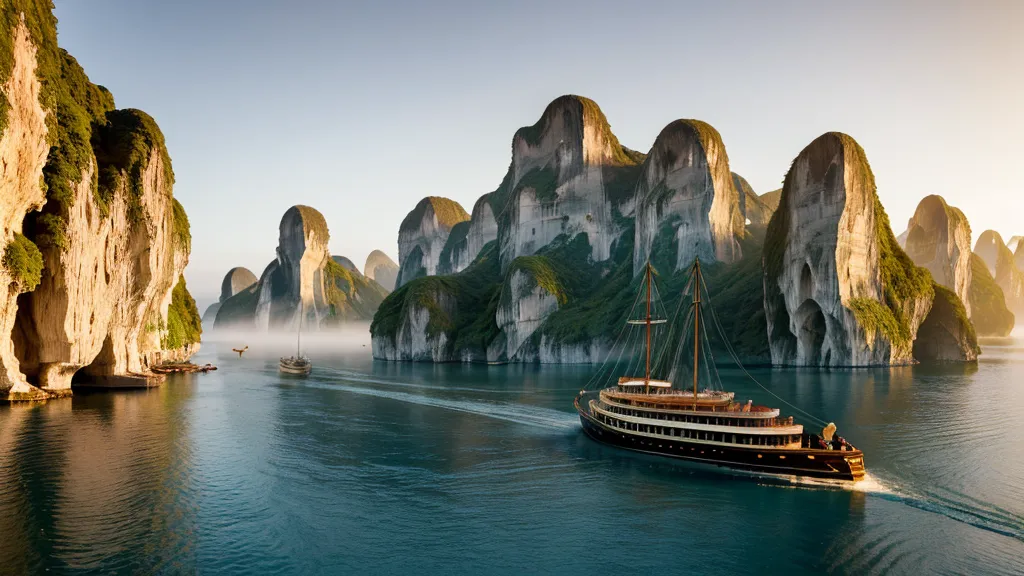
Triaging which corner of a 1,600-island bay is worth your limited daylight matters more than any single piece of gear you bring. The fix that actually worked across several bookings: skip Route 2 entirely and look for itineraries licensed to run in Lan Ha Bay instead, directly south of Halong around the eastern edge of Cat Ba Island. Geologically it's the same karst formation, but the pillars sit closer together, so you get narrow sea valleys and vertical canyons instead of a wide lake dotted with distant monoliths. Lan Ha also falls under separate provincial permits, which keeps the big multi-deck day boats mostly out of it. What you get instead are smaller wooden vessels and floating fishing hamlets tucked into coves where the water sits glass-calm well past sunrise.
Shoot From the Water, Not Above It
This is the part that actually changes your photographs, not just your itinerary. A sun deck three stories up gives you the same flattened, aerial-feeling view as a bus-top deck in a city center, looking down and across instead of up and into the scale of what's around you. Dropping into a bamboo sampan or a sit-on-top kayak at coves like Bright and Dark Cave puts your lens maybe a foot above the waterline, and the karst walls stop looking like scenery and start looming the way they're supposed to. It's the closest thing to shooting from inside the landscape instead of at it, and no amount of elevation on a bigger boat can fake that angle.
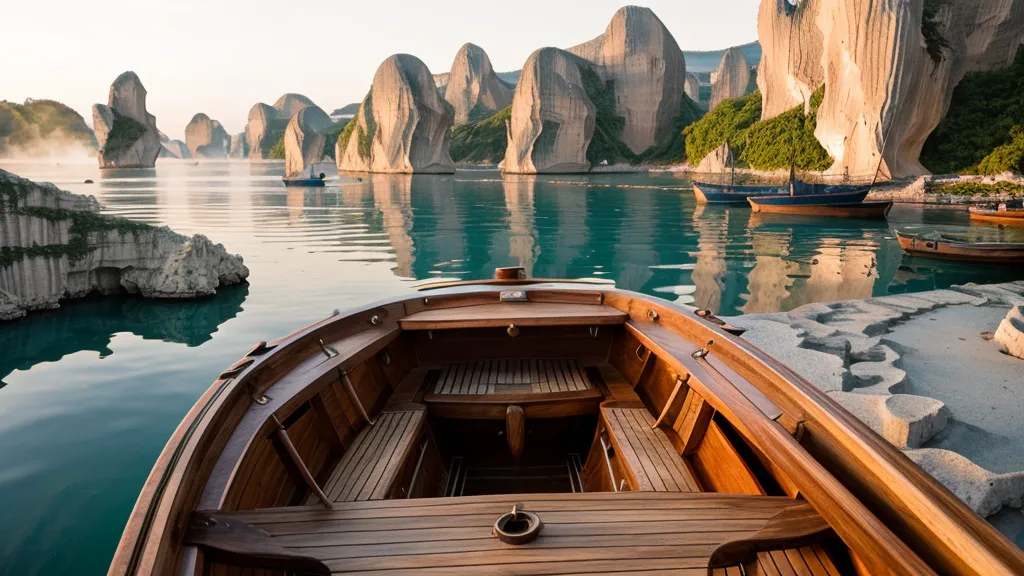
Sleeping on the water extends that same low vantage into the hours when the light is actually worth having, the same way picking the right hotel room can hand you a vantage point in a city, except this one floats. A six-hour day pass gets you off the bay before golden hour even starts. An overnight booking gets you the blue hour before dawn, fishing tenders drifting past under low tungsten lanterns in long, grainy exposures you'd otherwise only attempt braced against a window on a moving night bus. By the time the rest of the boat wakes up, the mist is usually sitting at mid-mountain height, cutting the limestone in half and giving you real separation between foreground rock and the towers behind it. You cannot buy that kind of depth on a midday run, the same way I learned shooting the Irish coast for my Cliffs of Moher Tours from Dublin for Better Coastal Landscape Photos piece: a lunch-driven schedule will never line up with the angle of the sun.
Reading a GetYourGuide Listing Like a Transit Map
None of this matters if you can't identify the right boat from a listing page. GetYourGuide alone carries hundreds of Halong options, and most of the marketing copy reads identically. Check the departure pier first, since a cruise leaving from Got Harbor in Hai Phong or Ben Beo on Cat Ba drops you straight into Lan Ha and skips the Tuan Chau bottleneck completely, no matter what else the listing promises. After that, look for language about tender transport by sampan or kayak rather than a straight sun-deck tour, confirm the passenger count stays in the twenty-to-thirty range instead of advertising a rooftop pool, and read the cave stops carefully, since three hours under colored LED spotlights is daylight you're paying to spend indoors instead of on the water.
A guided listing can only tell you so much, and self-guided research has its own blind spots. I ran into that face-first on an earlier Hanoi trip, following a Tripadvisor top-ten list straight to a restaurant that had shut down since, gate pulled, no sign, nothing. Lists go stale. So do default itineraries. The same instinct that makes you double-check a restaurant before walking there applies to a boat you're trusting with your one shot at a decent frame, which is the same argument against the path of least resistance I made in my Big Bus Los Angeles Route Review for Capturing Hollywood Sign Views piece too.
Gear for Humidity, Caves, and a Moving Deck
Shooting from a moving hull means your usual landscape habits need adjusting. Forget the tripod. Boat-deck vibration from the generators will ruin anything longer than a fraction of a second, so pack it away and shoot handheld with stabilization doing the work instead. Load matters too, since hauling a full bag up four hundred stairs or across a wet tender is a different problem than carrying it down a flat city sidewalk, the same tradeoff I weigh every time I pack for a walking-heavy assignment versus a boat-heavy one.
Humidity changes how the gear feels in your hands before it changes anything about the image. At ninety-percent humidity, the focus ring goes slippery under your palm and you end up gripping tighter without noticing, worth knowing before your hands cramp halfway through a shoot. A 70-200mm telephoto did more work for me in Lan Ha than any ultra-wide, compressing the limestone layers into something closer to a watercolor than a snapshot, while a 35mm prime earned its spot once the boat squeezed through the narrower gaps and the texture on the rock faces became the subject. Inside the caves, skip the colored LED-lit stops if you can, and where you do have to shoot, it's handheld, high ISO, the same as working any dim interior you don't control the lighting in. At the floating fishing hamlets, ask before you point a lens at someone's boat or their drying nets; it's permitted, which isn't the same thing as appropriate. Late winter through early spring brings marine fog and cooler air, no bright-sky postcard conditions, just the kind of flat, cinematic light that makes the karst look like an ink-wash scroll instead of a travel brochure cover. Back in Brooklyn, between assignments, the closest I get to that humidity is walking the Williamsburg Bridge pedestrian walkway in August, a poor substitute but it's what the city gives me until the next flight out.