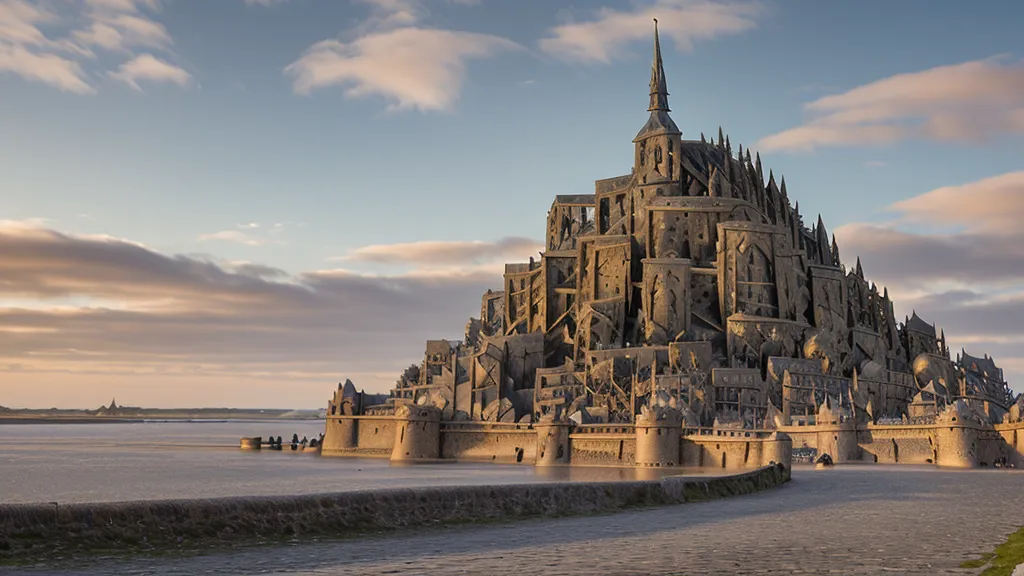
Mont Saint-Michel sits inside a bay that drains itself twice a day, then floods back in fast enough to strand anyone standing in the wrong spot. That single fact drives more of a Normandy day trip from Paris than any tour company's printed schedule. Most landscape photography advice about this coastline fixates on golden hour and skips the part that actually decides the shot: whether your time on the ground lines up with the water pulling back, or whether you end up photographing a flooding causeway from a parking lot three kilometers off.
Getting there is its own math problem. Paris to the bay runs about 360 kilometers, close to four hours each way by road. Drive yourself round trip and that's eight hours behind a wheel. A rental car turns a one-day shoot into a logistics project: tolls, a GPS that occasionally insists the causeway doesn't exist, and a fatigue that shows up in your framing before you've even parked.
Paris to the Bay: Coach, Train, or Rental Car
A coach or train handles those four hours better than driving does, because the time becomes yours instead of the road's. The straight-line distance to Mont Saint-Michel doesn't change based on how you cover it, but your energy on arrival does. I treat the coach as a mobile base camp: sleep on the way out, review the take on the way back.
Booking through something like GetYourGuide, I filter for slots marked independent time rather than the fully narrated group walks. The site earned UNESCO World Heritage status back in 1979, and I don't need that fact repeated into a microphone while I'm hunting for a sightline. That mindset is what sent me looking at Neuschwanstein Castle Tours from Munich for Landscape Photographers as a transport problem first, a castle second, and it's the guided-versus-self-guided call I break down at length in GetYourGuide After 32 Cities: A Photographer's Filter for What's Actually Worth Your Afternoon. The version that works lets me scout the salt marshes on my own clock instead of waiting on a group still debating where to find an omelet.
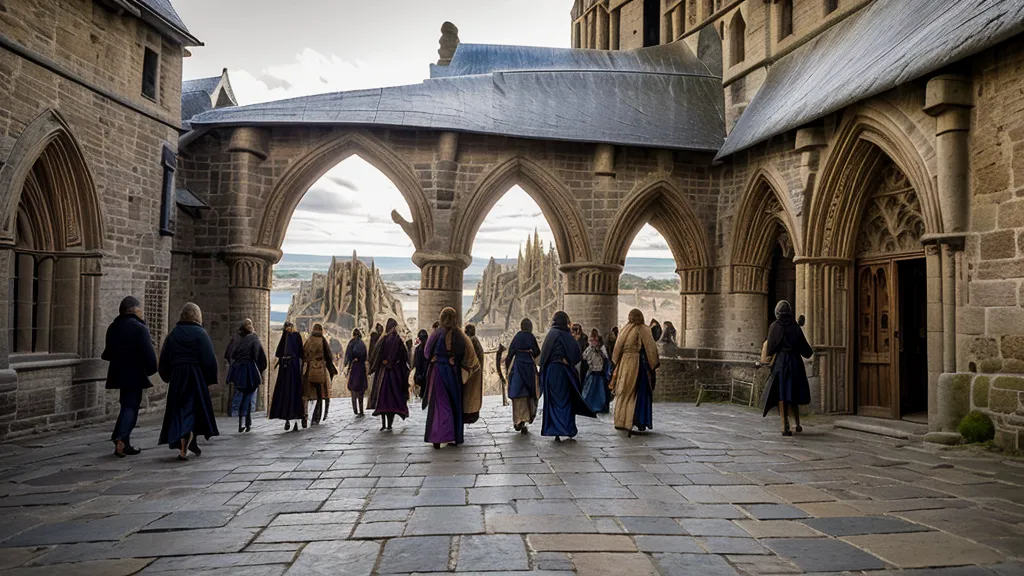
None of the usual city-trip tricks apply out here. A hop-on-hop-off ticket pencils out in a dense center like London, where one pass covers a dozen stops within walking distance of each other; past the Normandy coast there's one road in and one coach a day, so that economy doesn't exist. Every multi-attraction pass I've run break-even math on in New York assumes three or four sites inside city limits, and Mont Saint-Michel sits on nobody's coverage tier because it's dozens of kilometers past the nearest train station. Lisbon's tram 28 works as a tour substitute because it's a transit line that happens to pass the view; Normandy has no equivalent.
The one piece of gear I'd skip is the audio guide. I rented one at the entrance kiosk once, trying to get the history without the group walk, and it died before I'd made it past the gatehouse, dead batteries, no backup on offer, nothing to do but fold out the paper map instead. Where you base yourself matters less here than somewhere like Shibuya, where a hotel room picked for the skyline view is practically its own line item. For a day trip like this, the only vantage point worth paying for is a window seat on the right side of the coach.
Golden Hour Doesn't Matter Here
Short answer: not the way most guides insist. Sunrise tours here turn into a scrum of tripods and elbows on the footbridge, everyone chasing the same pink-sky cliché. Overcast midday light, the flat gray that shows up often enough in late summer, does something nicer to the granite instead: no blown highlights, no shadows collapsing into black pits in the narrow alleys. The abbey spent stretches of its history as a prison, through the Revolution and into the Second Empire, and that weight reads more honestly under a somber sky than under a postcard sunrise.
A 35-millimeter prime earns its keep on this shoot, wide enough to hold the scale of the architecture, tight enough to crop out the footbridge at the edges. Entry timing versus crowd size is a trade I run everywhere, the same call I'd make outside the Alcázar in Seville: arrive early for clean light and empty frames, or arrive late for softer sun and a lot more strangers in them. The golden-hour routing I use to chase skyline light across central Paris doesn't translate here, there's no second stop to hop to if the first one clouds over. Whatever romantic idea you have about shooting long exposures off a moving bus deck, the way you might chasing neon on a Vegas night tour, drop it. This coach is built for an early return to the city, not for parking somewhere dark.
I've chased that same hard flare before, off wet cobblestones somewhere in Rome around midday, every puddle throwing back its own small sun. The bay here pulls the same trick, just with a few hundred more square meters of wet sand to work with.
The Tide Table Beats the Alarm Clock
The real subject of this shoot isn't the abbey, it's the bay underneath it. This stretch of coast holds the highest tidal range in continental Europe, something close to 14 vertical meters between low and high, and finding an independent-time window that lined up with the water pulling back instead of coming in changed the whole trip. As the tide recedes it leaves ripple patterns in the wet sand that lead the eye straight toward the Mount, and that flat wet surface works as a mirror for reflection shots you can't get any other way.
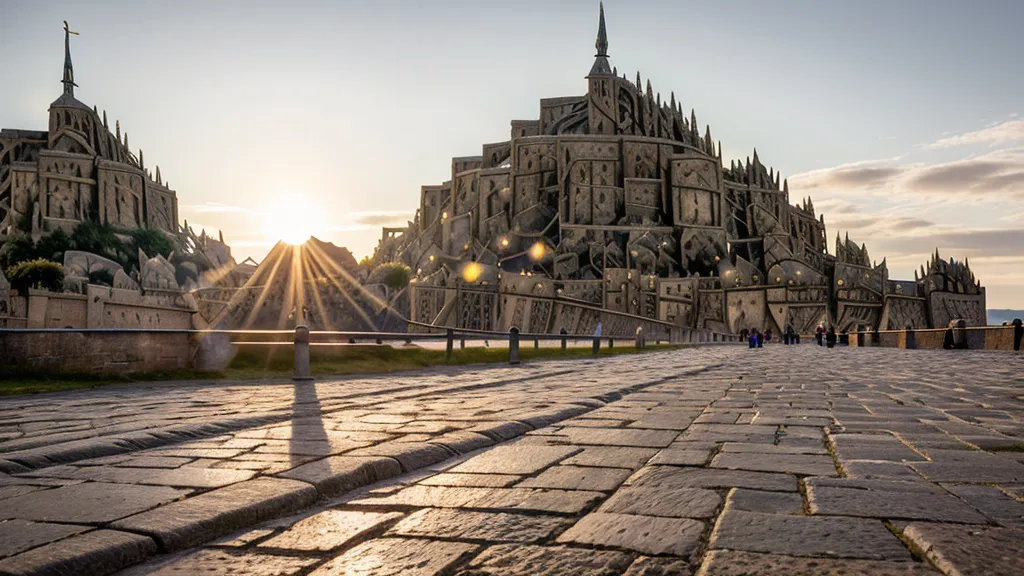
Queue strategy doesn't help here the way it does at somewhere like the Vatican, where timing a skip-the-line slot can save a whole morning. There's no ticket that moves a tide. Most day-trippers never notice any of this because they're in the souvenir shops along the Grande Rue exactly when the water's doing the interesting thing, and tracking the shoreline instead takes a kind of patience closer to the line for the Ikea ferry at the Red Hook dock on a slow Saturday than anything you'd call sightseeing.
Packing for Landscape Photography on the 350-Step Climb
Reaching the Mont Saint-Michel Abbey entrance means roughly 350 steps up the Grand Degré staircase, and every extra kilogram in the bag announces itself by step two hundred. Gear load versus mobility is a trade-off worth thinking through on any walking-heavy shoot, the same calculation I'd run packing for a day of walking tours in Rome. Out here it tips firmly toward carrying less: one body, two lenses, skip the second tripod head.
There's no elevated bus-deck shortcut to a clean vantage point the way there is on a sightseeing bus in Washington, where a top-deck seat buys height over the crowd for free. Here you earn the elevation with your calves or you don't get it. Inside the village the air turns to damp stone and salted butter from the galette stands along the Grande Rue, narrow and crowded enough that it's easy to miss the statue of Saint Michael at the top of the spire, gilded, doubling as a lightning rod, worth the climb on its own when it catches a break in the clouds. Photography restrictions inside the abbey run lighter than somewhere like the Prado in Madrid: no flash, no tripod in the nave, otherwise point the camera wherever the light is doing something interesting.
Where Group Tours Lose the Light
Group size controls your itinerary more than anything else once you're inside a tour, the same lesson that applies to a small wine tour through Tuscany: six people move at a completely different pace than twenty. Twenty people waiting on stragglers at a bakery stall is exactly how a group loses a tide window the whole day was booked around. A friend of mine, Weston Arambula, keeps a running spreadsheet of every guided tour he's paid for out of his own pocket, and Mont Saint-Michel is one of the rare entries he's marked worth repeating, always the independent-time version, never the fully narrated one.
A reader in Chicago, Ignacio Sousa, once pushed back hard enough on an earlier recommendation that I now run most itinerary drafts past him before they go anywhere, mainly because he won't accept a suggestion without proof it paid off on the ground. That's the bar for this one too. Book the slot timed to the receding tide, not the slot that's easiest to find on a schedule page. Carry less gear than feels responsible for the climb. Skip the audio guide. Treat the coach as a transport decision, not a compromise on the photography, and the coach pulling back into Paris well after dark will feel like it bought you the afternoon instead of costing you one.